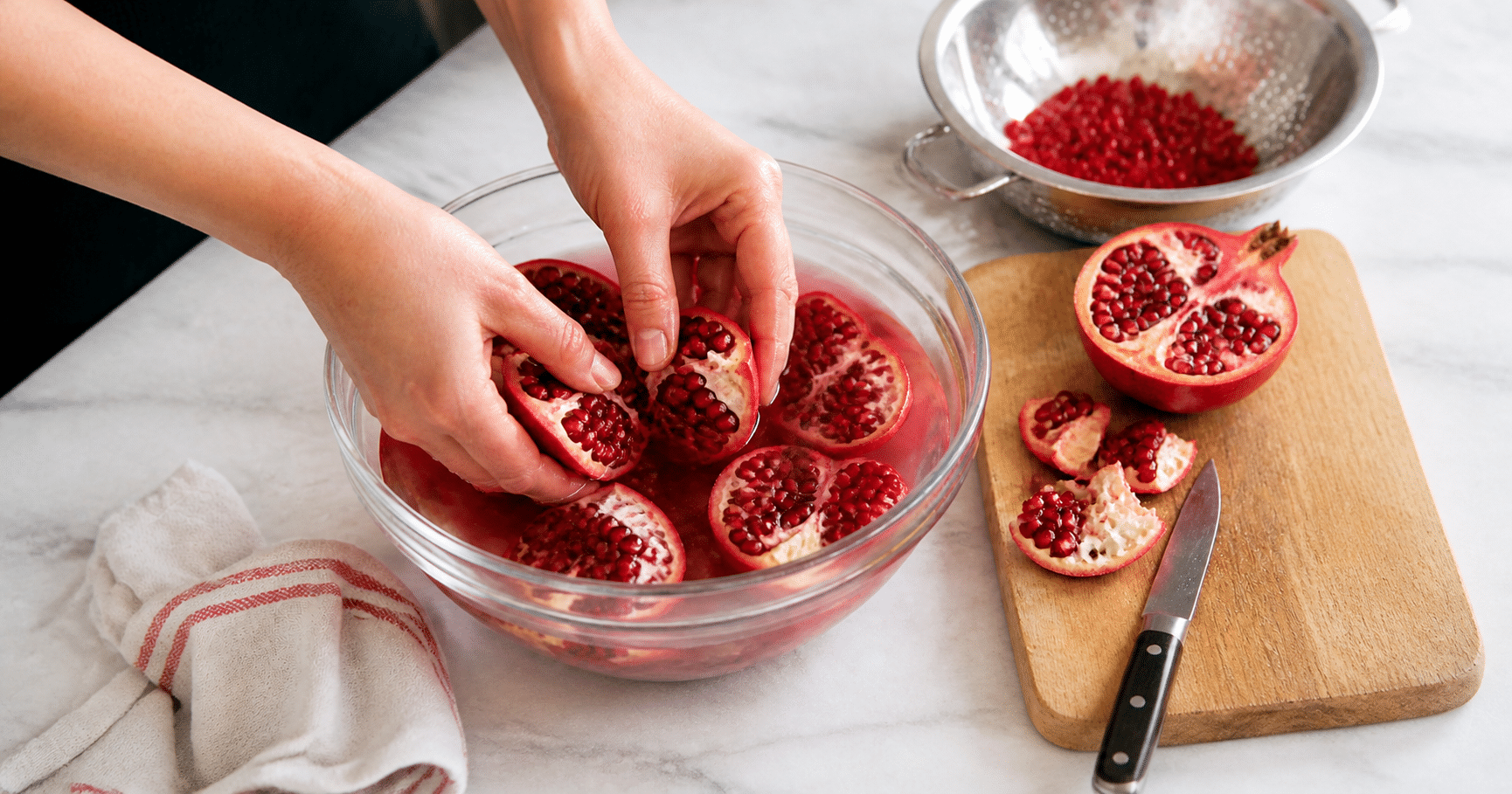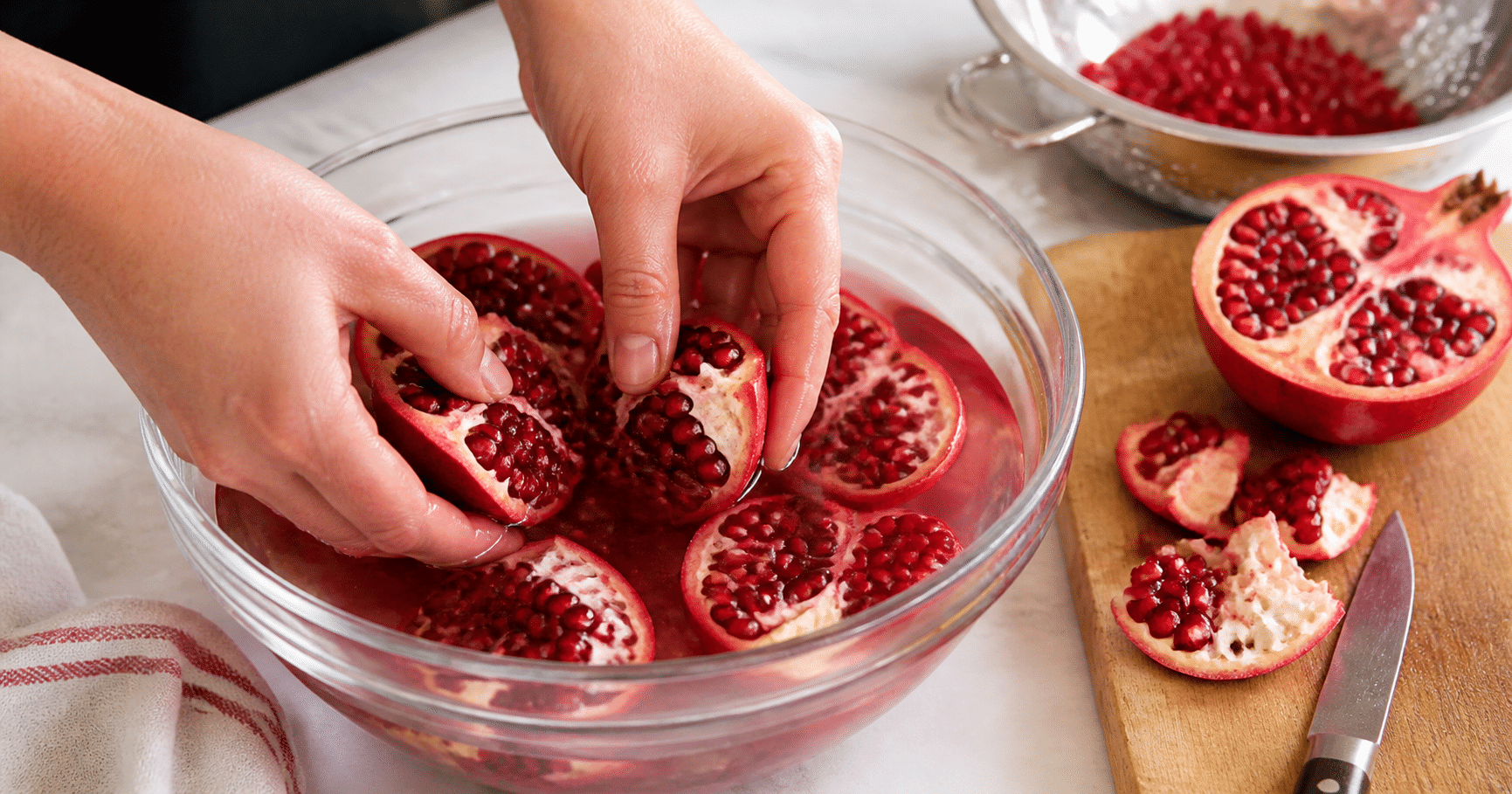
A ripe pomegranate is full of jewel-like arils—the juicy red coverings around the seeds—but getting them out can seem like an invitation to stain your shirt, counter, and cutting board. The familiar trick of whacking a halved fruit with a spoon often sends juice flying, especially when the pomegranate is ripe and soft.
A calmer approach takes only a few minutes: open the fruit along its natural sections, then loosen the arils in a bowl of water. The water helps contain splashes and makes the pale, papery membrane easier to separate.
Here’s how to remove pomegranate seeds without a mess, what to look for as you work, and how to store the arils once they’re ready to eat.
Why the Water-Bowl Method Works
A pomegranate is divided into sections by thin white pith. If you cut straight through the fruit, you slice into the arils and release juice. Scoring just the tough outer skin lets you pull the fruit apart along those natural divisions instead.
Once the sections are underwater, you can gently loosen the arils with your fingers. The arils generally sink, while much of the lightweight white membrane floats, so separating the two is easier than picking through a pile of fruit on a cutting board. The water won’t prevent every drop of juice, but it helps keep the work contained.
The edible part is often called a seed, though each glossy aril includes a juicy outer layer surrounding a small, crunchy seed. You can eat the whole aril or spit out the inner seed if you prefer the texture.
How to Remove Pomegranate Seeds Without Splattering
This method works well for one pomegranate and doesn’t require any special tools. Set out a roomy bowl and take your time scoring the skin; shallow cuts are the key to keeping the juice inside the arils.
What You’ll Need
-
- 1 pomegranate
-
- A sharp paring knife
-
- A large bowl filled with cool water
-
- A colander or fine-mesh strainer
Step-by-Step Instructions
-
- Prepare your work area. Place the bowl in or beside the sink, where any splashes are easy to rinse away. If you’re concerned about stains, wear an apron and use a cutting board you can wash promptly.
-
- Trim the crown. Set the pomegranate on the board. Slice off a thin piece from the flower-shaped crown at the top, just deep enough to expose the white pith.
-
- Score the skin. Look for the pale ridges that run down the fruit and mark its sections. Make shallow cuts from the top toward the bottom along those ridges. Aim to cut through the leathery skin without slicing deeply into the arils.
-
- Open the fruit. Put the pomegranate in the bowl of water. Use your thumbs to gently pull the sections apart. If a section resists, deepen its score slightly rather than forcing it.
-
- Loosen the arils. Keeping the sections underwater, use your fingers to roll the arils free from the white pith. Work gently; squeezing or scraping hard can break the arils and release juice.
-
- Skim and drain. Lift out floating pieces of membrane with your fingers or a spoon. Pour the bowl through a colander to catch the arils, then let them drain well.
-
- Check for strays. Pick out any remaining bits of pith before serving or storing. A few small pieces are harmless, but they can taste bitter.
Allow about 10 minutes for a first attempt; with practice, it often takes less. The finished arils are ready to spoon over oatmeal, yogurt, salads, or roasted vegetables, or to eat by the handful.
Small Details That Make the Job Easier
Use a shallow score, not a deep cut
The skin is tougher than the arils, so a light cut is usually enough to guide the fruit open. Cutting all the way through the pomegranate can rupture arils and leave you with more juice to clean up. Keep your fingers clear of the blade, especially when trimming the crown.
Skip the spoon-banging shortcut
Hitting the back of a halved pomegranate can dislodge arils, but it can also bruise them and send juice onto nearby surfaces. If you prefer a dry method, pull the scored sections apart over a wide bowl and gently work the arils free by hand. The water method is generally tidier for beginners.
Rinse stains promptly
Pomegranate juice can leave marks on fabric and some surfaces. Wipe up drips as soon as you notice them, and rinse the knife, board, and counter after you finish. If juice gets on clothing, blot rather than rub and rinse with cool water before laundering.
Store the arils well
Drain the arils thoroughly, then place them in a clean, covered container in the refrigerator and use them within about 3 to 4 days. For longer storage, spread them in a single layer on a tray to freeze; once firm, transfer them to a freezer-safe container. Frozen arils work especially well in smoothies or cooked dishes, though their texture may soften after thawing.
A Neater Way to Enjoy Every Aril
For cleanly removed pomegranate seeds, the useful trick is to follow the fruit’s natural sections instead of cutting through its middle. Score the skin, open the sections in water, and loosen the arils gently.
It’s a little slower than a dramatic spoon-and-bowl demonstration, but far less likely to leave red splashes behind—and it turns a pomegranate into an easy topping for everyday meals.