A smoothie can look wholesome and still be mostly fruit juice, with little of the fiber that makes whole fruit filling. Swapping juice for the fruit itself is a simple change: the blender breaks the fruit into a drinkable texture, but it does not strain away the pulp.
That distinction matters for anyone trying to add more fiber without turning breakfast into a complicated project. Berries, pears, apples, and oats can all make a smoothie more substantial, while milk, yogurt, or water can provide the liquid without adding juice.
There is one catch: blending makes it easy to use more fruit than you might eat whole. Below, you’ll find a practical way to build a high-fiber smoothie, a flexible berry-and-pear recipe, and tips for keeping the drink balanced and pleasant to sip.
Why Whole Fruit Makes a Better Smoothie Base
Juice usually contains much less fiber than the whole fruit it came from because juicing separates out some or all of the pulp. In a smoothie made with whole fruit, the edible skin and pulp stay in the glass. Fiber supports normal digestion, and fiber-rich foods can make meals more satisfying.
Blending changes the fruit’s texture, but it doesn’t remove its fiber. A smoothie is still different from eating fruit slowly: it’s easy to drink a large portion quickly, and blending does not guarantee the same fullness as chewing whole fruit. Keep the serving moderate and treat the smoothie as a meal or snack, rather than an extra alongside one.
For a more sustaining drink, combine fruit with a source of protein—such as plain yogurt, milk, or fortified soy milk—and consider a small amount of oats or seeds. These additions add texture and nutrients; they don’t make a smoothie a treatment for any health condition.
Three Ways to Build in More Fiber Without Juice
1. Choose fruit that brings its own fiber
Raspberries, blackberries, pears, and apples are useful options. Berries blend easily, while a pear or apple adds body. If using an apple or pear, wash it well and leave the skin on for more of the fruit’s natural fiber. Remove seeds and the hard core.
2. Add fiber-rich extras gradually
Oats, chia seeds, and ground flaxseed can boost a smoothie’s fiber and make it thicker. Start with a modest amount—such as a tablespoon of chia or ground flax—and adjust to your taste. Adding several fiber-rich ingredients at once can make the drink overly thick and may cause gas or bloating, particularly if you’re not used to them.
3. Use liquid for texture, not sweetness
Milk, unsweetened soy milk, or water can loosen a thick blend without the extra concentrated fruit sugars of juice. Plain yogurt adds protein and tang. If the smoothie needs more sweetness, try a ripe banana or a few extra berries before reaching for honey or sweetened yogurt.
Berry-Pear Oat Smoothie
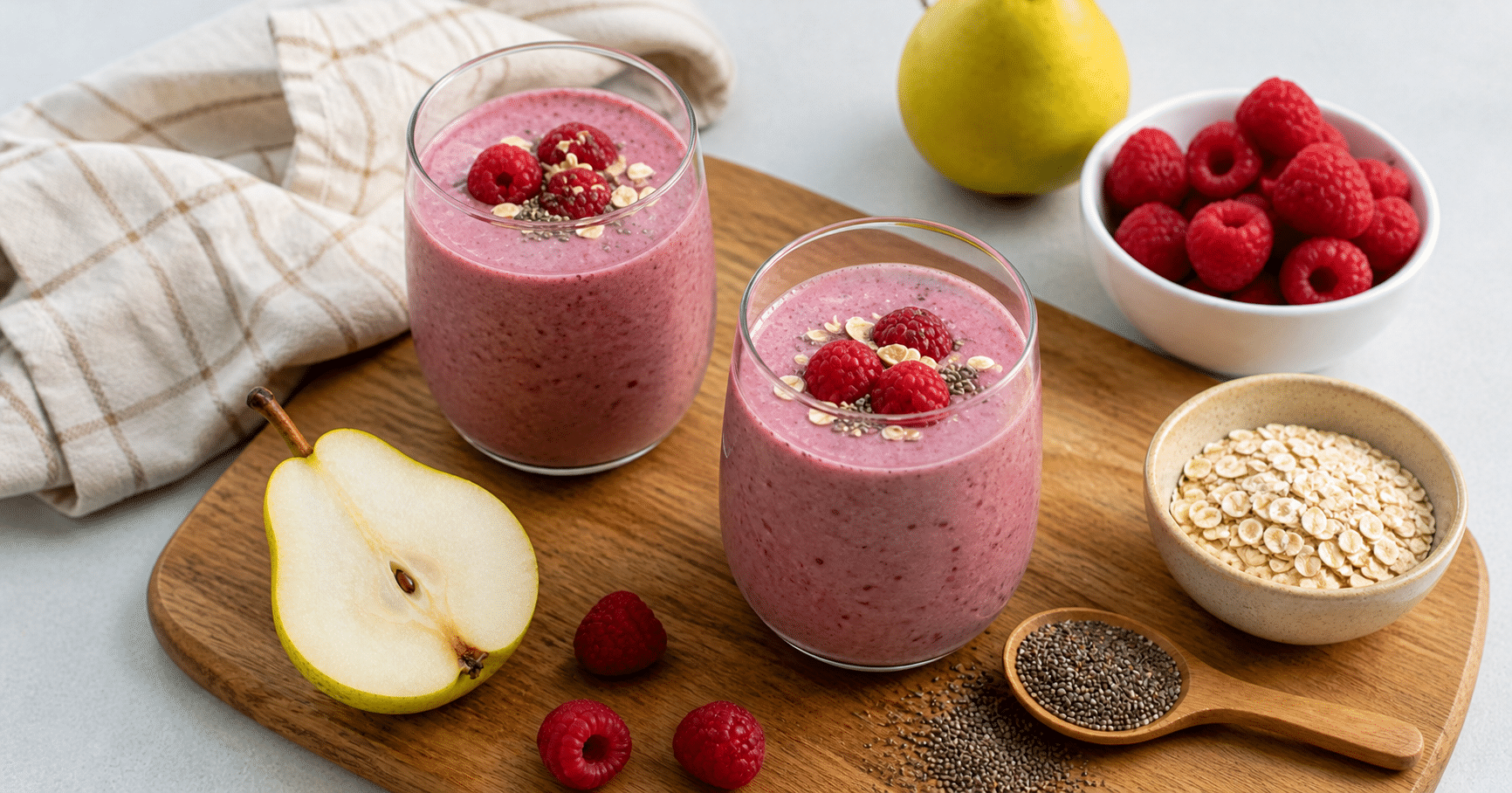
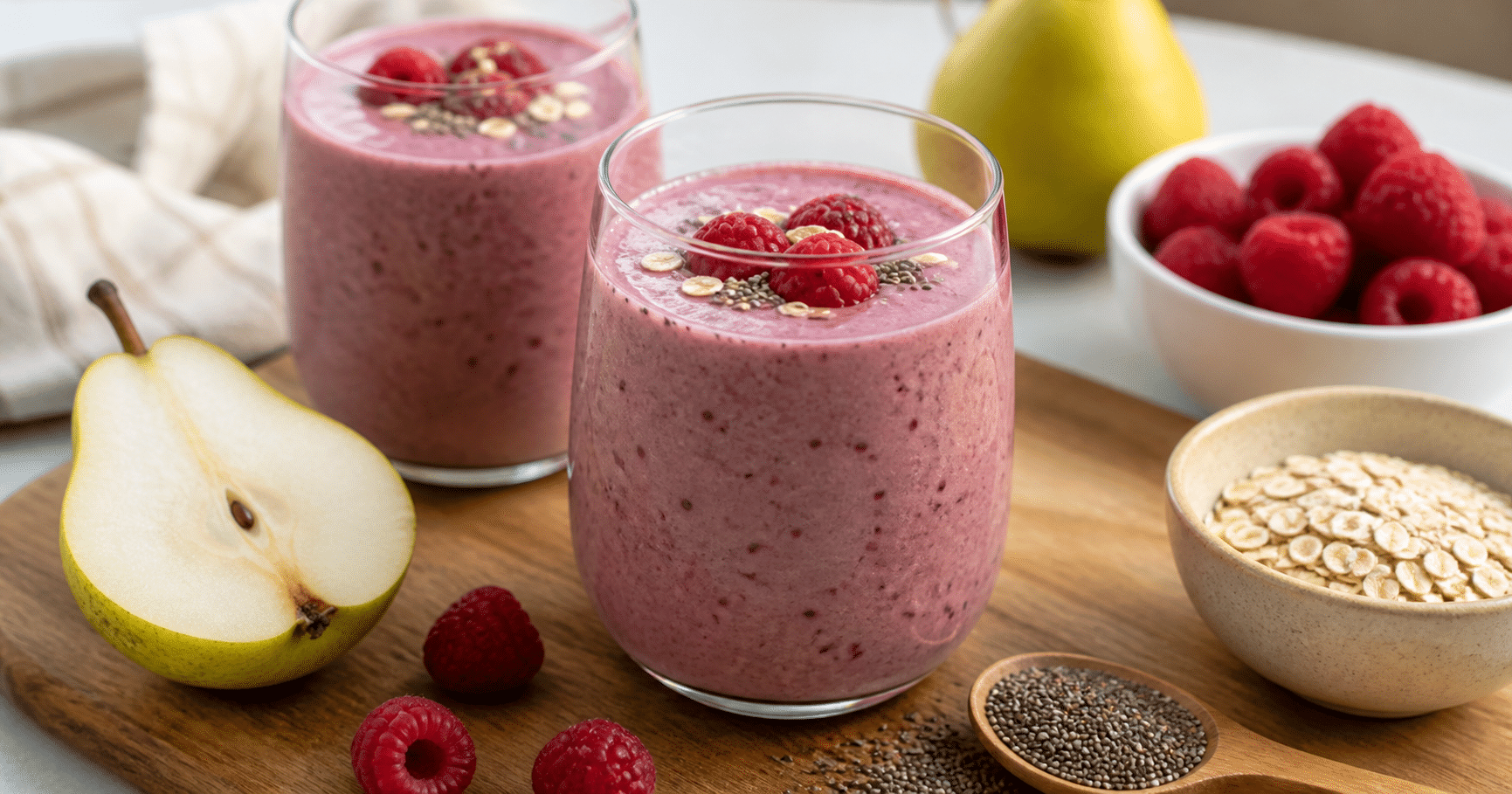
This recipe makes about two servings, with fruit, oats, and chia for a hearty texture. It takes roughly 5 minutes to prepare. Use less liquid for a spoon-thick smoothie or add a splash more to make it easier to drink.
Ingredients
-
- 1 ripe pear, washed, cored, and cut into chunks
-
- 1 cup raspberries, fresh or frozen
-
- 1/4 cup rolled oats
-
- 1 tablespoon chia seeds
-
- 3/4 cup plain Greek yogurt
-
- 1/2 to 3/4 cup milk or unsweetened soy milk
-
- A pinch of cinnamon, optional
Step-by-Step Instructions
-
- Add the milk, yogurt, pear, raspberries, oats, and chia seeds to a blender.
-
- Blend until smooth, stopping once to scrape down the sides if needed. If the mixture is too thick, add milk a tablespoon at a time.
-
- Taste and add cinnamon if you like. Let the smoothie stand for a few minutes if you want the chia and oats to soften and the texture to thicken.
-
- Divide between two glasses and serve promptly. If storing a portion, cover and refrigerate, then stir or shake before drinking; the mixture may thicken or separate.
For a different flavor, swap the pear and raspberries for a small apple and blackberries, or use frozen berries for a colder, thicker result. If you prefer a thinner drink, add water or milk rather than juice.
Small Adjustments That Make a Big Difference
Keep an eye on portions. A smoothie can contain several servings of fruit without looking like much in a tall glass. If you’re monitoring carbohydrate intake, remember that fruit and milk contribute carbohydrates even when there’s no added sugar; use a measured amount and choose ingredients that fit your needs.
Frozen fruit is convenient and often blends well, but it can make the mixture very thick. Add liquid gradually instead of pouring in a large amount at the start. If you have trouble with seeds or a thick texture, use a smaller amount of berries and blend longer; straining the finished smoothie, however, removes some of the pulp and fiber you’re aiming to keep.
Fiber is best increased steadily. If you’re adding oats, chia, or flax to a diet that has been low in fiber, begin with a smaller portion and drink enough fluids during the day. That can make the change more comfortable.
A Simple Rule for a Better Smoothie
Start with whole fruit, add a modest amount of protein, and use milk, yogurt, or water to reach the texture you like. A smoothie made this way keeps the fruit’s pulp in the glass and can be a convenient way to include fiber—not a reason to overlook portion size.
Skip the juice, keep the fruit, and let the blender do the mixing.