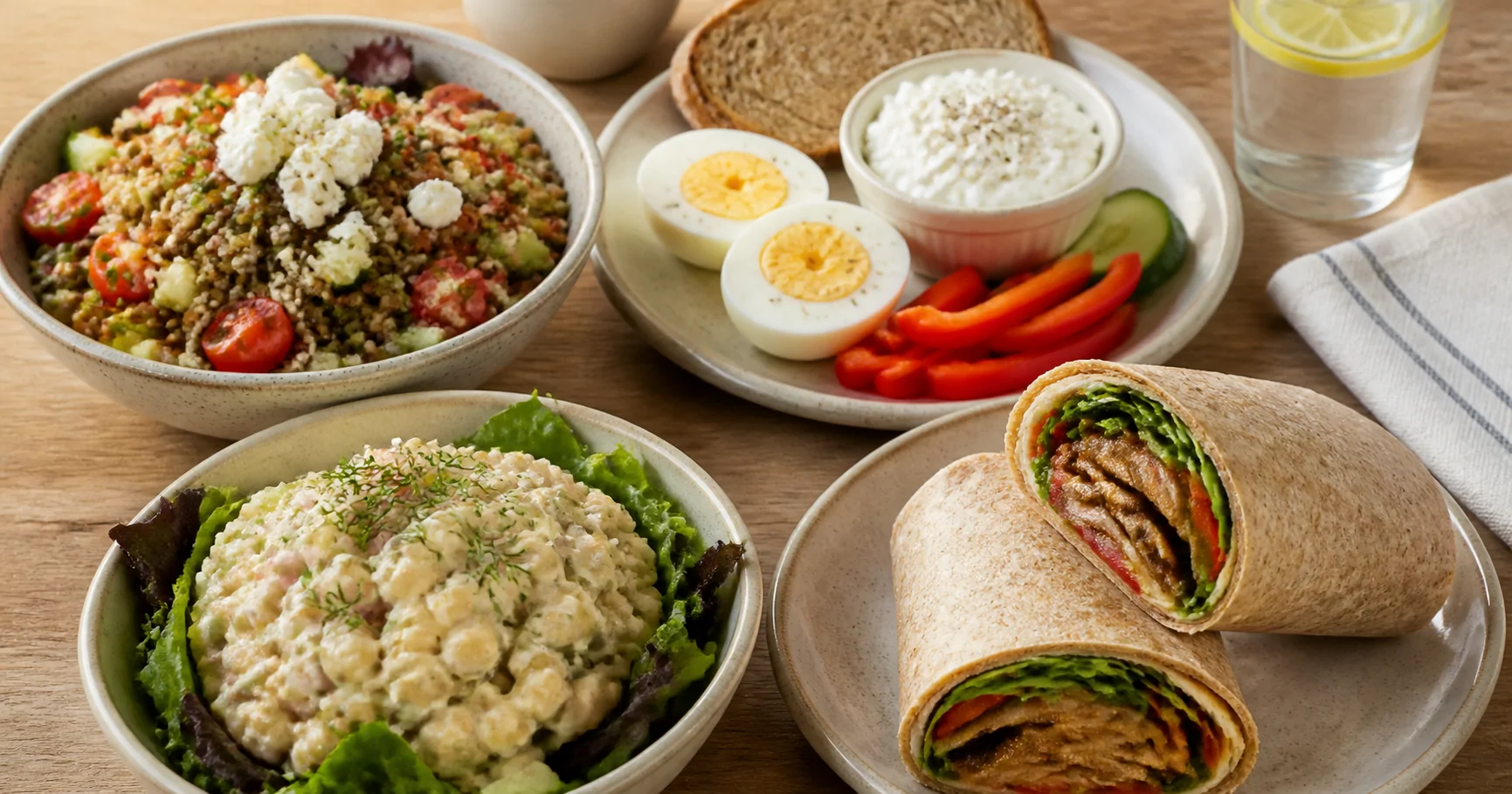
Tofu is convenient, but it is hardly the only way to build a filling vegetarian lunch. Beans, lentils, eggs, dairy, seitan, nuts, and seeds can all contribute protein—and many bring fiber, calcium, or other nutrients along with it.
The trick is to look beyond the word “protein” on a package. A lunch made mostly of vegetables may be nourishing but leave you hungry soon after, while a meal built around beans, eggs, or Greek yogurt can be more satisfying without requiring specialty products.
There is one detail worth keeping in mind: protein counts are estimates, not guarantees. Serving sizes and brands vary, so check labels when the exact amount matters. Here are several practical tofu-free lunch ideas, plus a chickpea wrap that is easy to prepare ahead.
Build Lunch Around a Protein-Rich Main Ingredient
Protein helps the body maintain and repair tissues, including muscle. Getting some at lunch can make it easier to spread protein intake across the day, rather than leaving most of it for dinner. Individual needs vary with body size, health, activity, and age, so there is no single lunch target that fits everyone.
Plant-based choices can be especially useful because beans and lentils also supply fiber, which supports digestive health and adds staying power to a meal. Eggs and dairy offer other convenient options. You do not have to combine particular plant foods in one sitting to make a meal “complete”; eating a varied diet over the course of the day is the more practical goal.
Four Tofu-Free Lunches That Bring More Protein
1. Lentil and quinoa bowl
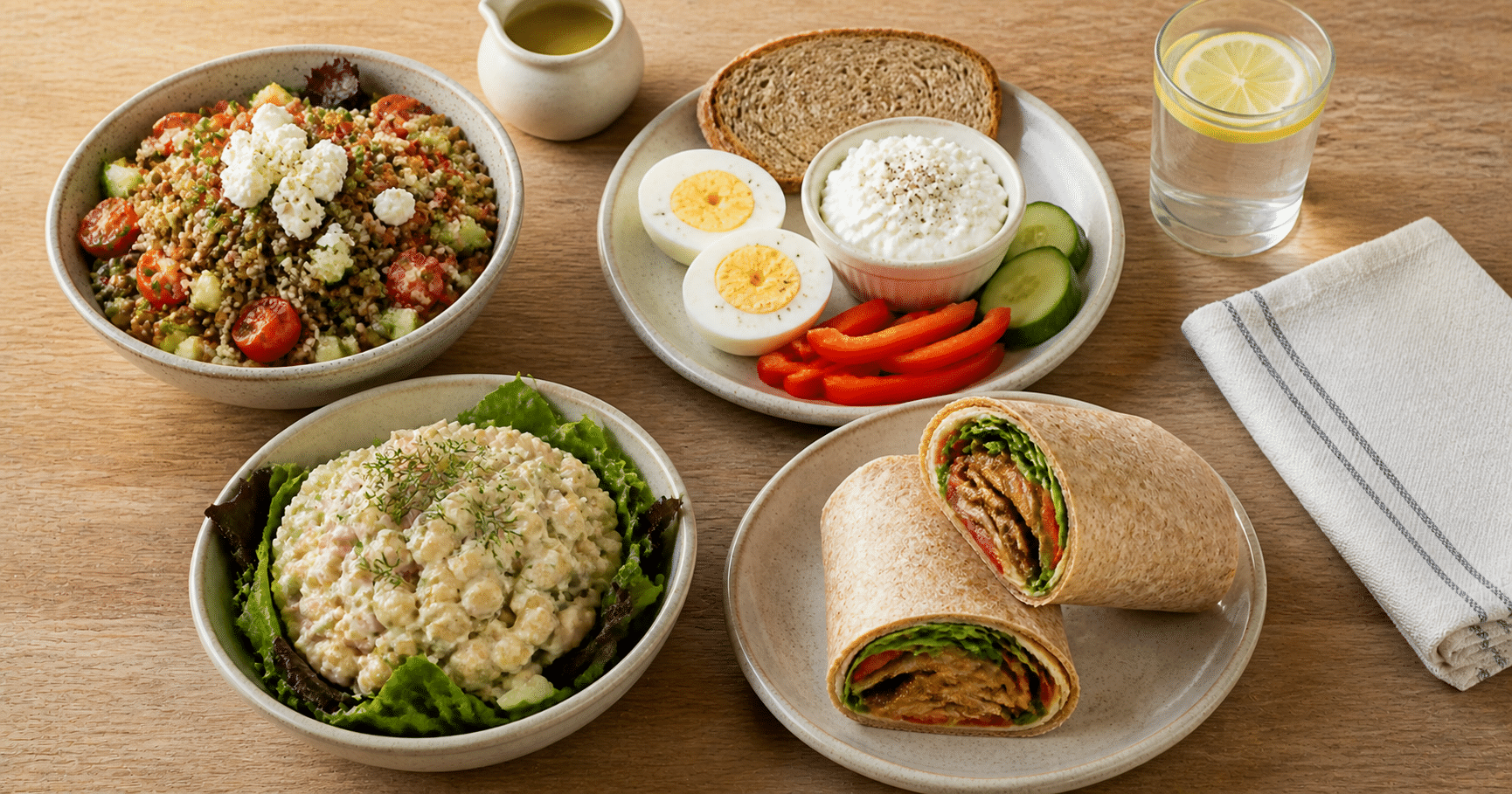
Combine 1 cup of cooked lentils with ½ cup of cooked quinoa, chopped cucumber, tomatoes, and a lemony dressing. Lentils provide about 18 grams of protein per cooked cup, and quinoa adds roughly 4 grams per half-cup. Add crumbled feta for more protein and a salty, tangy finish, if you like.
2. Cottage cheese and egg plate
Serve two hard-boiled eggs with ½ cup of cottage cheese, whole-grain toast, and sliced vegetables. The eggs contribute about 12 grams of protein, while cottage cheese often adds around 12 to 14 grams per half-cup, depending on the brand. This is a simple option when cooking a full lunch feels like too much work.
3. White bean and tuna-free “tuna” salad
Mash white beans with a little olive oil, lemon juice, chopped celery, and herbs, then spoon the mixture into a whole-grain pita or over greens. A cup of cooked white beans generally provides around 15 grams of protein. For a creamier version, stir in a spoonful of Greek yogurt; for crunch, add chopped walnuts or pumpkin seeds.
4. Seitan and vegetable wrap
Seitan, made from wheat gluten, is a concentrated protein source; a 3-ounce portion often provides about 20 grams, though products differ in protein and sodium. Warm it with peppers and onions, then tuck it into a whole-grain wrap with greens. Since seitan contains gluten, it is not suitable for people who need to avoid it.
Make Ahead: Chickpea and Greek Yogurt Salad Wraps
This creamy, crunchy filling makes two substantial wraps. Greek yogurt replaces much of the mayonnaise often used in chickpea salad, while chickpeas provide fiber and protein. Depending on the yogurt and tortillas, each wrap will have roughly 25 grams of protein.
Ingredients
- 1 can (15 ounces) chickpeas, rinsed and drained
- 1 cup plain Greek yogurt
- 1 celery stalk, finely chopped
- 2 tablespoons chopped red onion or scallions
- 1 tablespoon lemon juice
- 1 teaspoon Dijon mustard
- 1 tablespoon chopped parsley or dill
- Black pepper, to taste
- 2 whole-grain tortillas
- Optional: lettuce, baby spinach, or sliced cucumber
Step-by-Step Instructions
- Put the chickpeas in a medium bowl and mash them with a fork or potato masher. Leave some whole for texture.
- Stir in the Greek yogurt, celery, onion, lemon juice, mustard, herbs, and black pepper.
- Taste and adjust the lemon or seasoning. If the mixture seems too thick, add a spoonful of yogurt or a splash of water.
- Spoon half the filling onto each tortilla. Add greens or cucumber, fold in the sides, and roll tightly.
Preparation takes about 15 minutes. For make-ahead lunches, refrigerate the chickpea filling in a covered container and assemble the wraps when ready to eat; this helps keep the tortillas from turning soggy. Use refrigerated leftovers within three to four days, and follow the storage guidance on the yogurt and other ingredients.
Small Choices That Make Lunch More Satisfying
A protein-rich center works best as part of a balanced meal. Pair beans, eggs, or dairy with vegetables and a whole-grain food such as barley, brown rice, or whole-grain bread. The combination brings different textures and nutrients, and the grain or produce can make lunch feel like a meal rather than a snack.
Keep convenience in the equation. Canned beans are a useful shortcut; rinsing them reduces some of the surface sodium. Plain Greek yogurt, cottage cheese, and packaged seitan can differ substantially by brand, so compare labels for protein and sodium if you are watching either. Nuts and seeds are nutritious add-ons, but their protein contribution is modest for a small sprinkle.
Useful tip: Cook a batch of lentils or hard-boil several eggs when you have time. A ready-to-use protein makes a quick lunch easier to assemble on a busy day.
A More Flexible Way to Think About Vegetarian Lunch
You do not need tofu—or a complicated recipe—to make a vegetarian lunch more filling. Start with a protein-rich ingredient, add vegetables and a satisfying grain, and use the foods you already enjoy: lentils, chickpeas, eggs, cottage cheese, Greek yogurt, or seitan.
The best lunch is one you will actually make. Keep a few dependable ingredients on hand, and protein can become part of the everyday routine rather than another item on the to-do list.