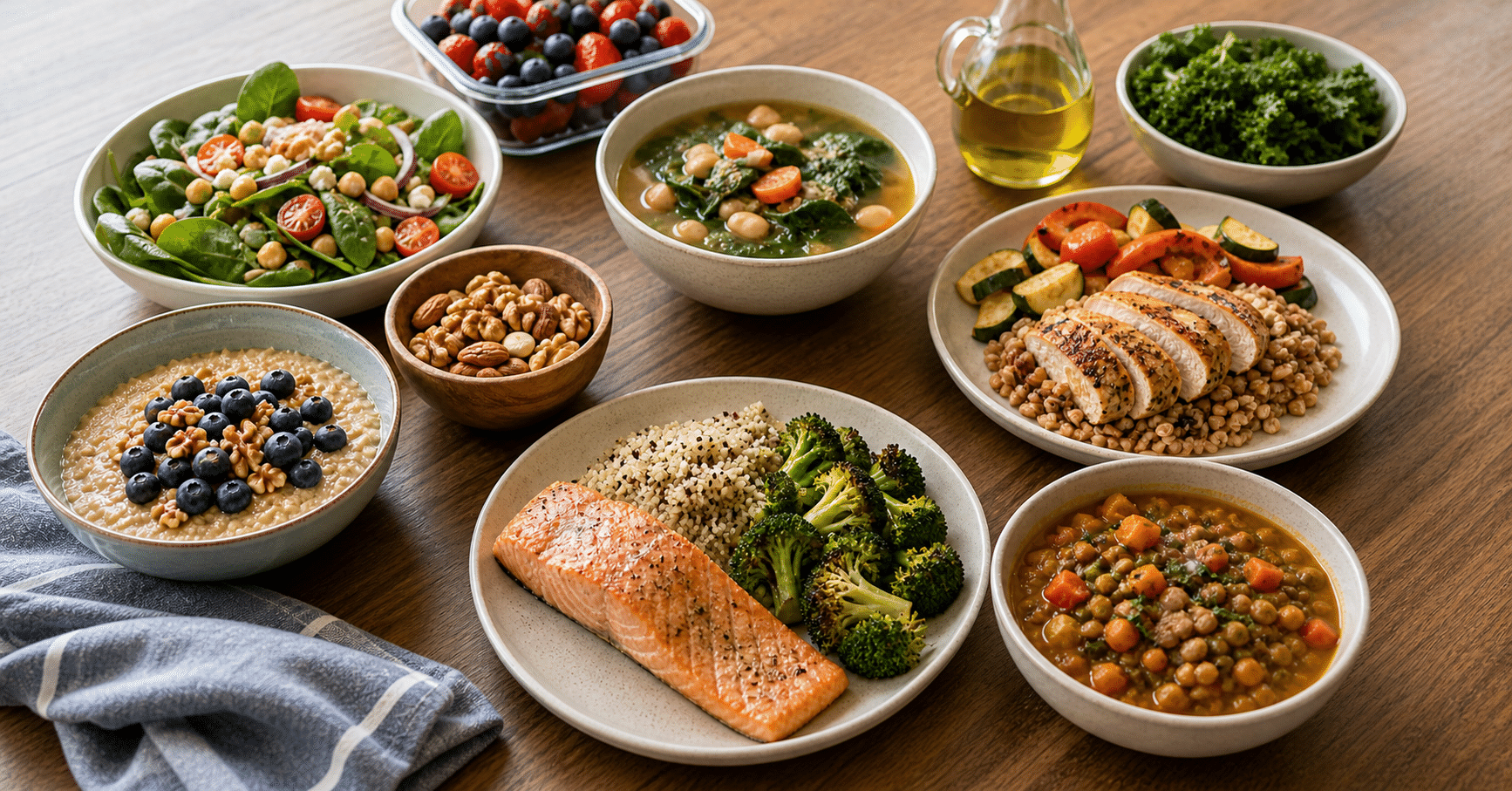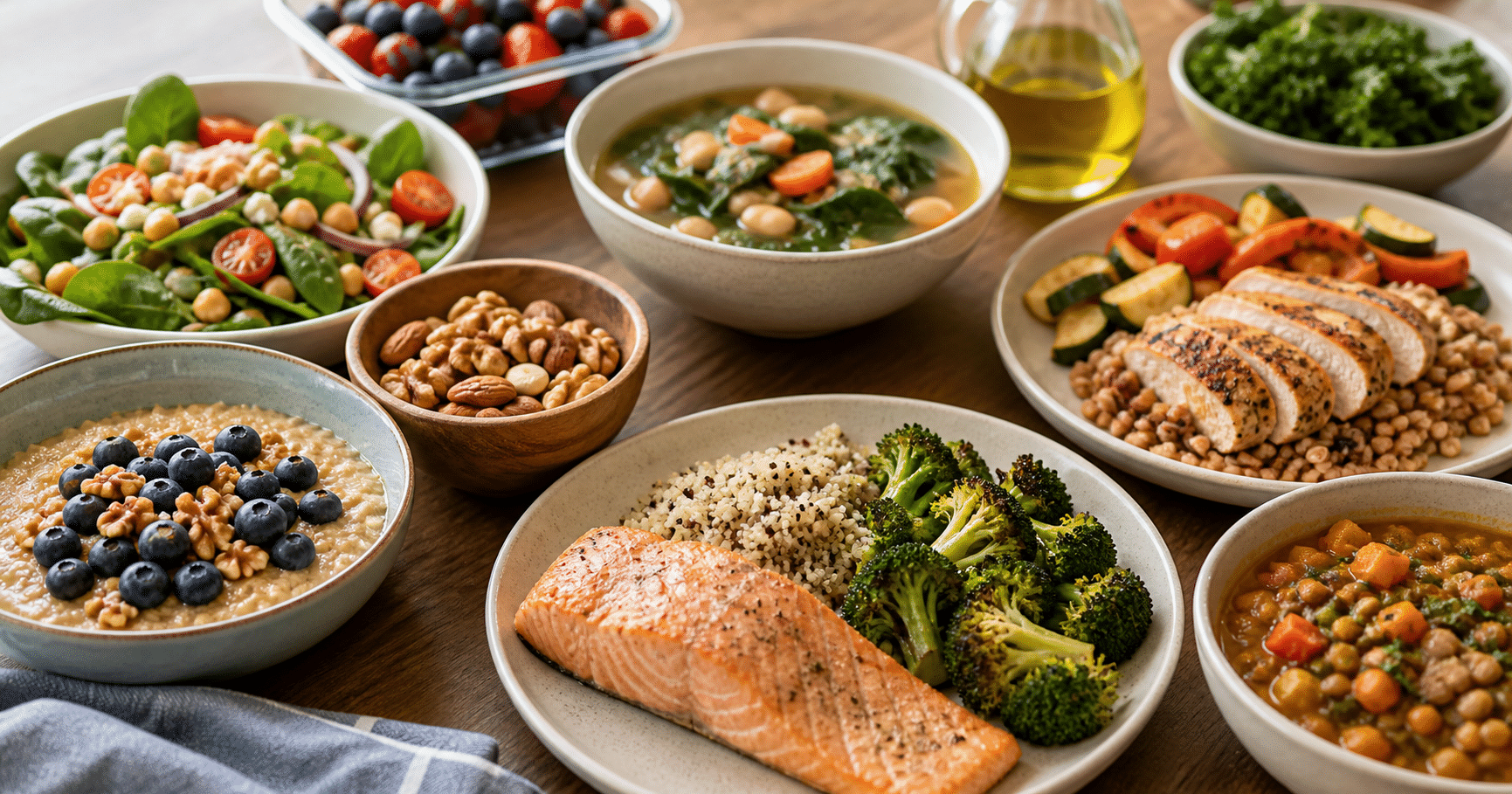
A MIND diet menu does not require specialty foods or a new recipe every night. It is built from familiar choices—vegetables, berries, beans, nuts, whole grains, fish and poultry—with olive oil as the main cooking fat.
The name combines the Mediterranean and DASH eating patterns. Researchers developed it to study eating habits associated with brain health, but it is not a prescription or a guarantee against memory loss. The practical appeal is simpler: its food priorities can help you plan satisfying meals without counting every nutrient.
One common menu-planning mistake is focusing on what to avoid and overlooking the foods to include regularly. Below, you’ll find the basic targets, a realistic seven-day menu and a short prep plan to make the week easier.
What the MIND Diet Emphasizes
The MIND diet gives extra attention to leafy greens and berries, alongside other vegetables, beans, nuts, whole grains, fish, poultry and olive oil. These foods supply a mix of fiber, unsaturated fats and other nutrients. The pattern also limits foods such as red meat, butter, cheese, pastries and fried or fast food.
In research, MIND diet scores have been associated with cognitive outcomes, but an association does not prove that the diet itself prevents or treats dementia. Researchers continue to study how eating patterns relate to brain health. It is most useful to view MIND as a flexible way to build balanced meals—not as a promise or a strict medical diet.
Turn the MIND Principles Into a Weekly Routine
1. Use targets as planning prompts, not a pass-or-fail test
Commonly summarized MIND targets include leafy greens at least six times a week, other vegetables daily, berries at least twice a week, beans three or more times a week, nuts at least five times a week, and fish at least once a week. The pattern also favors three or more whole-grain servings daily and poultry at least twice a week.
Serving sizes vary by food, so use package guidance or familiar portions rather than assuming every item has the same serving size. If you miss a target one day, simply work that food into another meal.
2. Build meals from a simple template
For lunch and dinner, start with vegetables, add a protein such as beans, fish or poultry, then include a whole grain. Breakfast can help with the grain and berry goals: oatmeal with blueberries and walnuts, for example, is more useful than trying to squeeze every target into dinner.
3. Make the limits manageable
Rather than banning foods, let the preferred options take up more space on the menu. Use olive oil for cooking and dressings, and keep red meat, butter, cheese, sweets and fried foods as less frequent choices. Wine is not required; there is no need to start drinking for the sake of the diet.
A Practical Seven-Day MIND Diet Menu
This sample week pairs whole grains with meals and spreads greens, berries, beans, nuts, fish and poultry across the calendar. Adjust portions to your appetite and needs. Choose low-sodium canned beans when possible, and rinse them before use.
- Monday: Breakfast: oatmeal with blueberries and walnuts. Lunch: spinach and white bean soup with whole-grain toast. Dinner: baked salmon, quinoa and roasted broccoli.
- Tuesday: Breakfast: whole-grain toast with an egg and fruit. Lunch: chicken-spinach salad with whole-grain bread. Dinner: lentil curry with brown rice and sautéed vegetables.
- Wednesday: Breakfast: oatmeal with strawberries and almonds. Lunch: chickpea and arugula bowl with farro. Dinner: chicken, barley and kale soup.
- Thursday: Breakfast: plain yogurt with berries, oats and chopped nuts. Lunch: black bean and spinach bowl with brown rice. Dinner: whole-wheat pasta with tomato sauce, mushrooms and zucchini.
- Friday: Breakfast: overnight oats with blueberries and walnuts. Lunch: leftover chicken and vegetable sandwich on whole-grain bread. Dinner: trout, sweet potato and kale.
- Saturday: Breakfast: whole-grain pancakes topped with berries. Lunch: hummus and vegetable whole-wheat pita. Dinner: bean chili with brown rice and a side salad.
- Sunday: Breakfast: oatmeal with banana and pecans. Lunch: spinach salad with white beans and whole-grain crackers. Dinner: roast chicken, farro and roasted carrots.
Fruit, a small handful of nuts, or vegetables with hummus can fill in between meals if you want a snack. This menu is a framework, not a requirement to eat these exact dishes.
Make the Week Easier With a Short Prep Session
What You’ll Need
- Old-fashioned oats, brown rice, quinoa or farro, and whole-grain bread
- Spinach or kale, plus other vegetables such as broccoli, carrots and zucchini
- Fresh or frozen berries, beans or lentils, and a small variety of nuts
- Fish, chicken, olive oil, and basic seasonings such as garlic, pepper and herbs
Step-by-Step Instructions
- Choose two grains to cook ahead. Prepare a pot of brown rice and another grain, such as quinoa or farro, following package directions. Cool promptly and refrigerate in covered containers.
- Prepare vegetables for quick meals. Wash and dry leafy greens, and chop sturdy vegetables for roasting or soup. Keep delicate greens separate so they stay in good shape.
- Set up easy breakfasts. Portion oats and nuts into containers. Add berries in the morning, or refrigerate overnight oats for a ready-to-eat breakfast.
- Keep proteins flexible. Rinse and portion canned beans, and plan when to cook fish or poultry. Refrigerate cooked food promptly and follow standard food-safety guidance for storage and reheating.
- Assemble meals as needed. Combine the prepared grains with greens, vegetables and beans for lunch, or serve them alongside freshly cooked fish or chicken at dinner.
Small Swaps That Keep the Pattern on Track
Frozen berries and vegetables can be practical choices, especially when fresh produce is expensive or likely to go unused. Canned beans and fish can also save time; compare labels for sodium, and choose lower-sodium options when available.
For a quick lunch, stir beans into leftover whole grains, add a handful of spinach and dress with olive oil, lemon and pepper. That combination covers several MIND priorities without requiring a separate recipe. If you take warfarin, keep your intake of vitamin K-rich greens consistent from week to week rather than making sudden large changes, and consult your care team about diet adjustments.
A Menu Built on Repeatable Choices
The easiest way to build a MIND diet week is to plan a few repeatable breakfasts, cook grains ahead and rotate beans, fish and poultry through meals. Aim for the overall pattern, not perfection at every sitting.
When the refrigerator holds greens, berries, cooked grains and a ready protein, a brain-conscious meal is often just an assembly job.