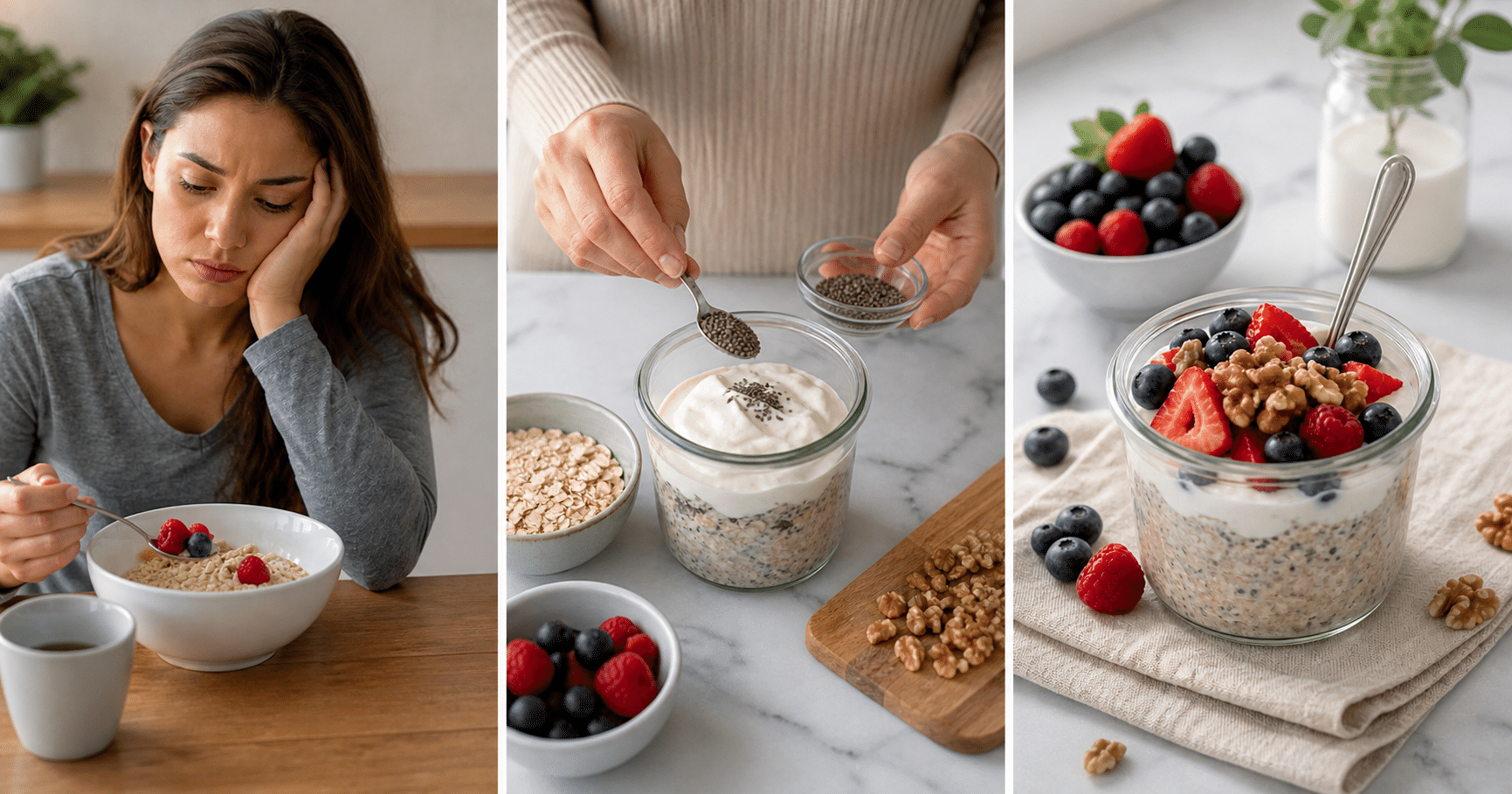
A breakfast can look substantial and still leave you rummaging for a snack an hour later. One common reason: it may provide plenty of quick energy but little protein or fiber—the two nutrients that help make a meal more satisfying.
You don’t need protein powder, fiber supplements, or an elaborate morning routine to change that. A few familiar foods—such as Greek yogurt, oats, berries, and chia seeds—can turn a simple breakfast into a more filling one.
The trick is balance, not chasing a perfect number. Here’s how protein and fiber contribute, what to put on your plate, and an easy make-ahead breakfast you can adjust to your appetite.
Why Protein and Fiber Make a Useful Breakfast Pair
Protein is found in foods such as eggs, dairy, beans, nuts, seeds, fish, and meat. It provides amino acids the body uses to maintain and repair tissues, including muscle. Getting some protein at breakfast can also help spread protein intake across the day rather than leaving most of it for dinner—a practical consideration as adults get older and maintaining muscle becomes increasingly important.
Fiber is the part of plant foods that isn’t fully digested. Beans, fruit, vegetables, oats, nuts, and seeds all contribute. Some types of fiber absorb water or form a gel; others add bulk. The effects vary by food, but fiber-rich ingredients can make a meal more substantial and support regular digestion.
Together, these nutrients can help a breakfast feel more satisfying. That doesn’t mean a particular meal will control hunger for everyone or cause weight loss. Appetite, portion size, sleep, activity, and personal health all matter. Think of protein and fiber as a useful foundation, not a guarantee.
Three Simple Ways to Build a More Filling Plate
1. Start with a protein anchor
Choose one main protein source, then build around it. Plain Greek yogurt, cottage cheese, eggs, milk, and tofu are convenient options; leftover beans or fish can work too. Check labels on packaged foods, since protein amounts can vary widely between brands and styles.
2. Add fiber from plants, not just a sprinkle
Fruit, vegetables, oats, whole-grain bread, beans, nuts, and seeds all help bring fiber to the meal. A handful of berries adds more than color to yogurt, while oats alongside eggs or a piece of whole-grain toast can make a savory breakfast more substantial.
If you’re not used to eating much fiber, increase it gradually and drink fluids regularly. A sudden jump—especially from a large serving of seeds or bran—may cause gas or bloating.
3. Use texture and flavor to keep it enjoyable
A filling breakfast should still be something you want to eat. Combine creamy and chewy textures, and use cinnamon, herbs, citrus zest, or unsweetened fruit for flavor. A small amount of nuts or seeds adds crunch, though these foods are energy-dense, so a modest portion is often plenty.
Make-Ahead Berry, Yogurt, and Oat Breakfast
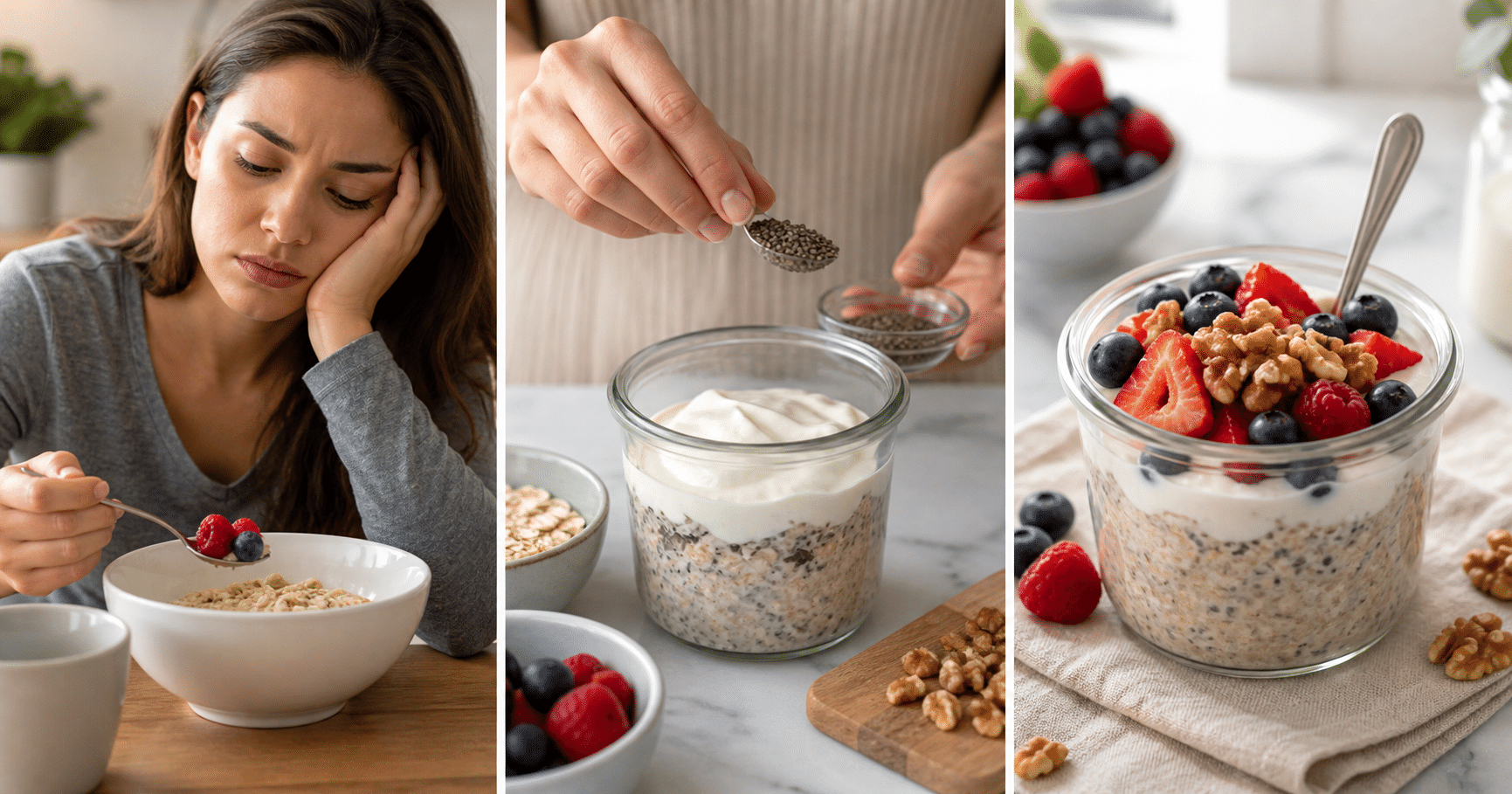
This no-cook bowl brings together dairy protein, whole-grain oats, chia seeds, and fruit. Depending on the yogurt and milk you choose, it may provide roughly 25–30 grams of protein and around 10–13 grams of fiber; check product labels for a closer estimate.
Ingredients
-
- 1/2 cup old-fashioned rolled oats
-
- 1/2 cup milk of choice
-
- 1 tablespoon chia seeds
-
- 3/4 cup plain Greek yogurt
-
- 1/2 cup fresh or frozen berries
-
- 1/4 teaspoon cinnamon, optional
-
- 1 tablespoon chopped walnuts or almonds, optional
Step-by-Step Instructions
-
- In a lidded container, stir together the oats, milk, chia seeds, and cinnamon.
-
- Cover and refrigerate for at least 4 hours or overnight, until the oats soften and the mixture thickens.
-
- In the morning, stir in the Greek yogurt. Add a splash of milk if you prefer a looser texture.
-
- Top with berries and, if you like, chopped nuts. If using frozen berries, thaw them in the refrigerator or stir them in the night before.
Keep the covered mixture refrigerated and make a fresh serving within a few days. For a gentler start, use 1 teaspoon of chia seeds instead of a tablespoon, then increase gradually if it suits you. You can also serve the oats warm: cook them with the milk, let them cool slightly, and add the yogurt and berries afterward.
Easy Swaps for Different Mornings
The same idea works beyond oats. For a savory plate, pair eggs with black beans and salsa, then add avocado or vegetables for extra plant variety. For a quick option, spread cottage cheese on whole-grain toast and add sliced tomato or fruit on the side.
When choosing a packaged breakfast, look beyond words such as “high protein” on the front. A product may have protein but little fiber, or fiber but very little protein. Pairing it with fruit, nuts, yogurt, or an egg can help round out the meal without relying on a supplement.
A Simple Formula to Remember
Choose a protein-rich food, add a fiber-rich plant food, and finish with a flavor or texture you enjoy. Greek yogurt with oats and berries is one easy version; eggs with beans and vegetables is another.
A more satisfying breakfast doesn’t have to be complicated. Build it from ordinary foods, and adjust the portions to your appetite and comfort.