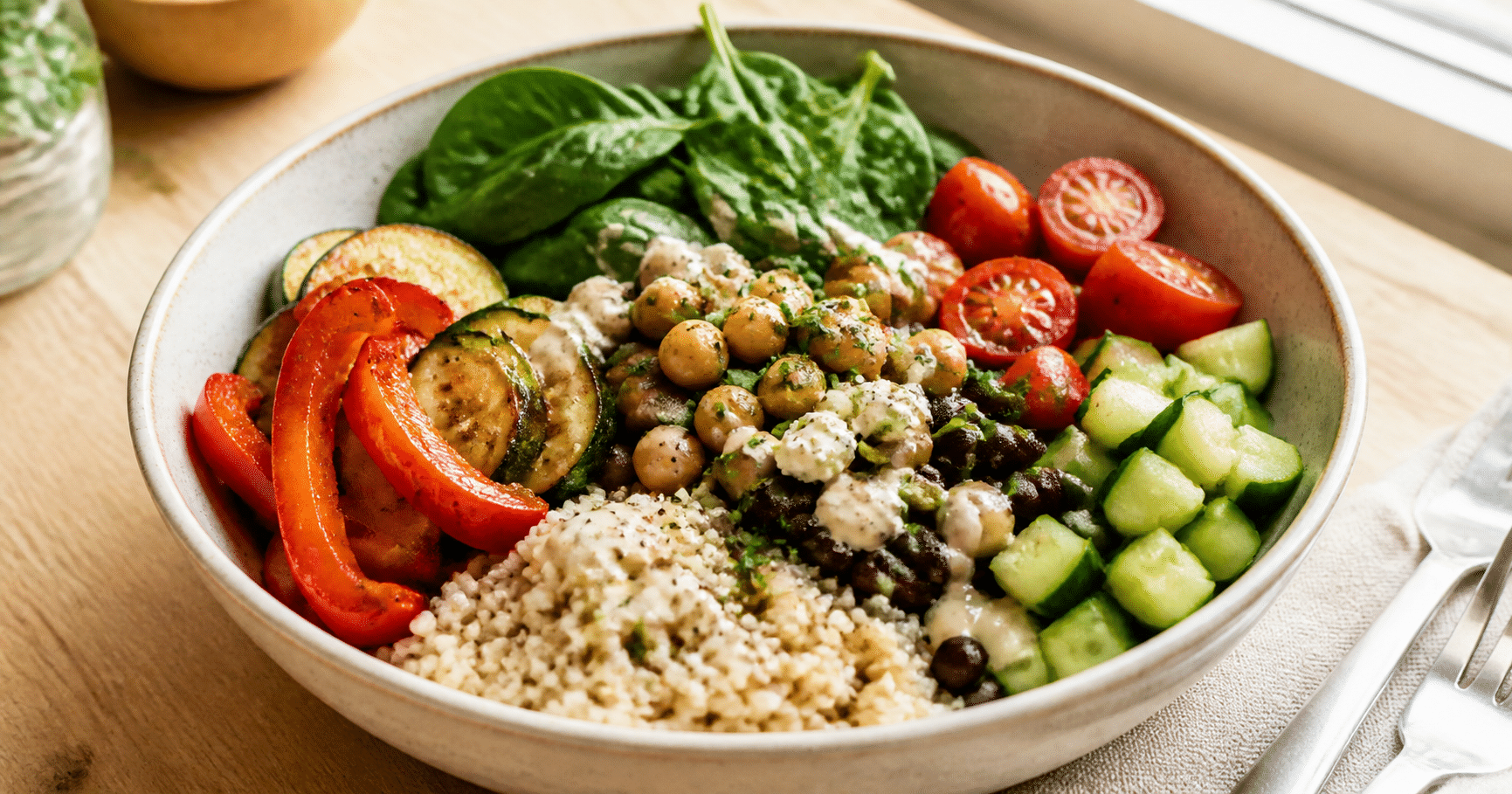
A good lunch does not need to be complicated to carry you through the afternoon. A bowl built from beans, vegetables and a whole grain brings together fiber, protein and carbohydrates in a practical combination that is easy to adapt to whatever is in the refrigerator.
Beans are the quiet workhorse. They are inexpensive, keep well in the pantry and can turn a handful of vegetables into a filling meal. But a bowl that is mostly beans may feel heavy, while one made only of raw vegetables may not satisfy for long.
The useful detail is balance: pair beans with a modest portion of grain, a generous mix of vegetables and a flavorful dressing. That creates a lunch with varied textures and nutrients—not a promise of endless energy, but a sensible meal that can help you feel comfortably fueled.
Here’s why the combination works, how to build a flexible lunch bowl, and a simple recipe you can prepare in about 20 minutes.
Why Beans, Vegetables and Grains Make a Useful Lunch
Your body uses carbohydrates as an important source of energy. Whole grains and beans both provide carbohydrates, while beans also contribute plant protein and fiber. Fiber slows digestion and adds staying power to a meal; protein helps make it more satisfying. The exact effect varies from person to person, and no single lunch can guarantee a particular energy level.
Vegetables add color, flavor and a range of nutrients, while also bringing volume and texture to the bowl. A mix of cooked and fresh vegetables can make lunch more appealing than a pile of greens alone. A little unsaturated fat—from olive oil, avocado, nuts or seeds—can add richness and help the meal feel complete.
The bowl is also easy to adjust. If you are especially hungry, add more grain or beans. If you prefer a lighter lunch, use a smaller grain portion and add extra vegetables. Think of the recipe as a template, not a strict formula.
Three Ways to Make the Bowl More Satisfying
1. Let beans do more than add bulk
Black beans, chickpeas, kidney beans, cannellini beans and lentils all work. Their fiber and plant protein make them more substantial than many toppings, and their mild flavors pair well with vegetables and herbs. If beans are new to your routine, start with a portion that feels comfortable and increase gradually; a sudden jump in fiber can cause gas or bloating for some people.
2. Use a grain that holds its texture
Brown rice, quinoa, farro, barley and bulgur are useful bases. Cooked grains can be made ahead, which makes a weekday bowl quicker to assemble. Whole grains generally retain more of the grain’s fiber than refined versions, but the best choice is one you enjoy and can prepare conveniently.
3. Mix fresh and cooked vegetables
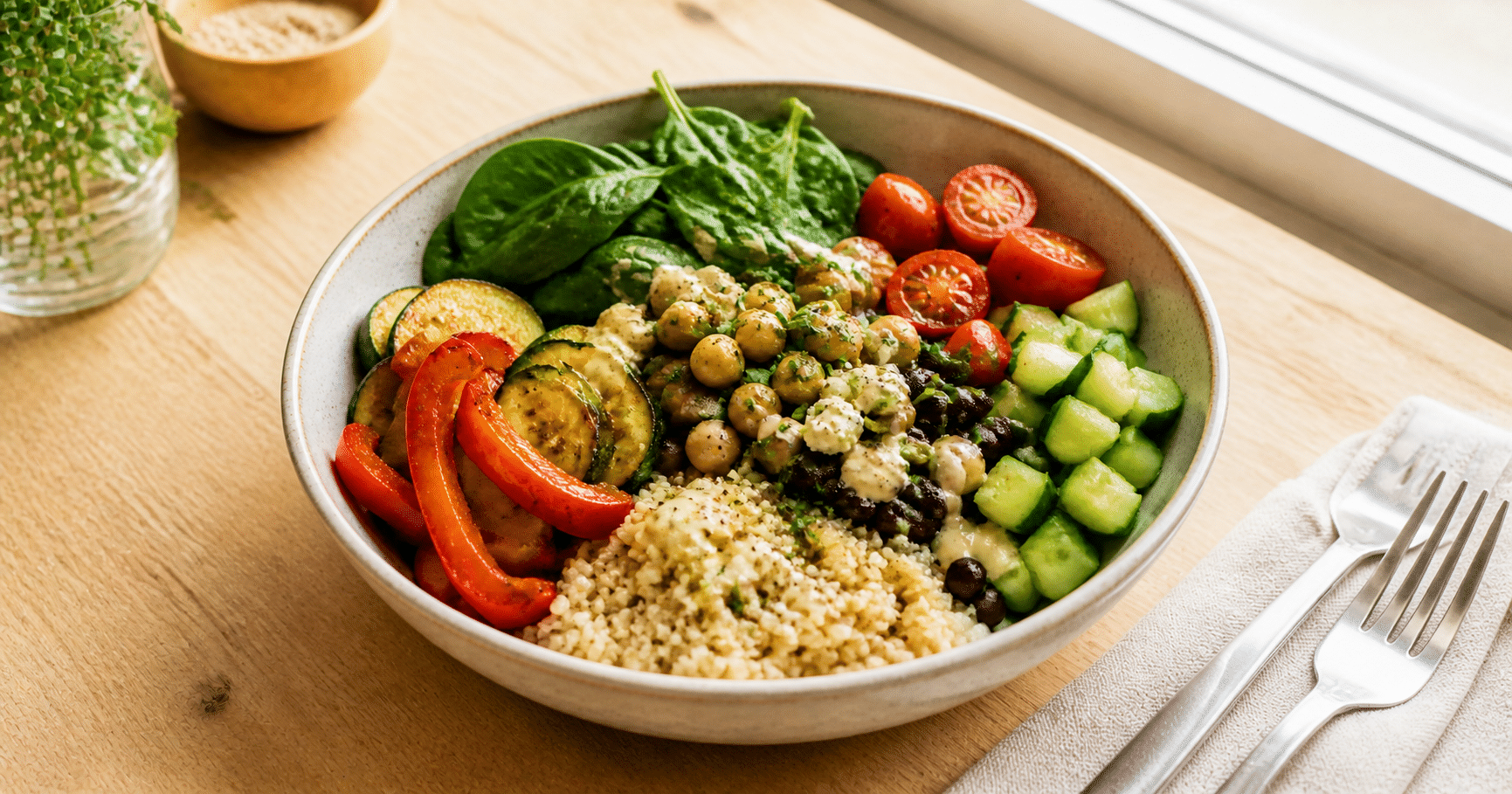
Roasted or sautéed vegetables add warmth and a deeper flavor; fresh vegetables bring crunch. Try cooked peppers or zucchini with cucumber, tomatoes or shredded cabbage. This contrast makes a simple bowl feel more like a composed meal, and it helps use up small amounts of produce before they go to waste.
A Simple Bean and Vegetable Lunch Bowl
This recipe makes two satisfying bowls. It uses a quick lemon-garlic dressing, but you can change the vegetables and beans to suit what you have.
Ingredients
-
- 1 cup cooked brown rice or quinoa
-
- 1 can (15 ounces) chickpeas or black beans, drained and rinsed
-
- 1 tablespoon olive oil, plus a little for the vegetables
-
- 1 small red bell pepper, sliced
-
- 1 small zucchini, sliced
-
- 1 cup cherry tomatoes, halved
-
- 1 cup chopped cucumber or shredded cabbage
-
- 2 cups baby spinach or chopped romaine
-
- 2 tablespoons plain yogurt or tahini, optional
-
- Juice of 1 lemon
-
- 1 small garlic clove, finely grated or minced
-
- Black pepper, to taste
-
- Chopped parsley, pumpkin seeds or crumbled feta, optional
Step-by-Step Instructions
-
- Cook the grain. If it is not already prepared, cook the rice or quinoa according to the package directions. For a quicker lunch, use leftover grain that has been promptly refrigerated.
-
- Cook the vegetables. Warm a small amount of olive oil in a skillet over medium heat. Add the pepper and zucchini and cook for about 6–8 minutes, stirring occasionally, until tender and lightly browned. Add a splash of water if they begin to stick.
-
- Make the dressing. Stir together the tablespoon of olive oil, lemon juice and garlic. For a creamier dressing, whisk in the yogurt or tahini and a teaspoon or two of water until it reaches a pourable consistency. Season with black pepper.
-
- Build the bowls. Divide the grain between two bowls. Add the beans, warm vegetables, tomatoes, cucumber or cabbage, and spinach or romaine. Spoon the dressing over the top and finish with parsley, seeds or feta if desired.
Allow about 20 minutes if starting with cooked grain; cooking the grain from scratch may add time. Refrigerate leftovers in a covered container and use within 3–4 days. For the best texture, store dressing separately and add it just before eating. Refrigerate cooked food within two hours, or sooner in hot weather.
Small Choices That Make a Big Difference
Canned beans are a convenient option. Draining and rinsing them can remove some of the surface sodium, though the amount varies by product. If sodium is a concern, compare labels and choose a lower-sodium can when available. You can also cook dried beans, but follow reliable cooking instructions; cooking time depends on the bean and method.
Keep flavor in the plan. Lemon, vinegar, garlic, herbs, spices and a spoonful of salsa can make beans and vegetables appealing without relying on a heavy sauce. If the bowl tastes flat, it may need acidity or seasoning rather than more oil.
For easy assembly, prepare a batch of grain and wash or chop a few vegetables ahead of time. Keep wet ingredients, such as tomatoes and dressing, separate until serving if you want the greens and grains to stay fresher. A handful of nuts or seeds adds crunch; avocado or a little olive oil adds richness.
A Practical Bowl for the Middle of the Day
Beans, vegetables and whole grains offer a flexible way to bring fiber, protein and carbohydrates together at lunch. The combination can be filling, but portions and individual responses differ—adjust the bowl to your appetite and preferences.
Start with what is already in your kitchen, add one flavorful dressing and aim for a mix of textures. The most useful lunch bowl is the one simple enough to make again tomorrow.