Omega-3s are often described as “good fats,” but that phrase leaves out what makes them different. They help build cell membranes, and certain kinds are especially abundant in the brain and retina. Your body also uses them to make compounds involved in processes such as inflammation and blood clotting.
The catch: omega-3 is a family of fats, not a single nutrient. The omega-3 in walnuts is not the same as the kinds found in salmon, and your body does not convert them equally well. Knowing the difference makes it easier to choose foods that fit your meals—and to understand what fish oil can and cannot do.
Here’s a practical guide to the three main types, the foods that supply them, and a simple way to work more omega-3-rich ingredients into your day.
Three Omega-3s, With Different Jobs
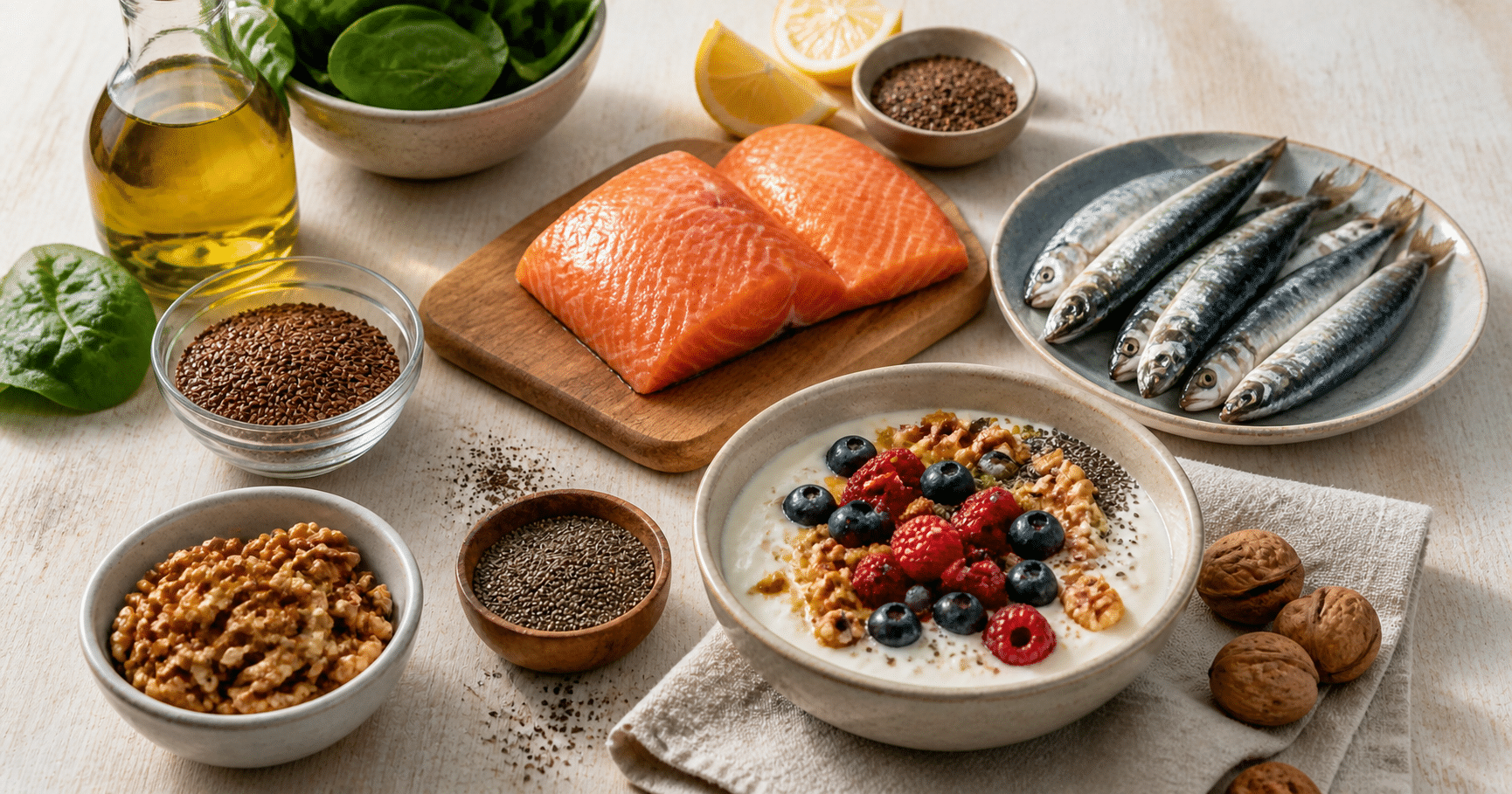
The best-known omega-3s are ALA, EPA, and DHA. ALA (alpha-linolenic acid) is found mainly in plant foods such as flaxseed, chia seeds, walnuts, and canola oil. It is essential, which means your body needs it from food.
EPA (eicosapentaenoic acid) and DHA (docosahexaenoic acid) are found mostly in seafood, including fatty fish. DHA is a structural component of cell membranes, especially in the brain and retina. EPA and DHA also serve as starting materials for signaling compounds that help regulate a range of body processes.
Your body can convert some ALA into EPA and DHA, but the conversion is limited and varies from person to person. That makes plant sources valuable, but not a straightforward substitute gram-for-gram for seafood. A balanced eating pattern can include both.
Where to Find Omega-3s in Everyday Foods
1. Fatty fish deliver EPA and DHA
Salmon, sardines, trout, herring, and mackerel are useful sources of EPA and DHA. The amount depends on the species, serving, and how it was raised or prepared, but a 3-ounce serving of cooked salmon commonly provides well over a gram of EPA and DHA combined. Sardines and canned salmon can be convenient options, too.
U.S. dietary guidance recommends adults eat at least 8 ounces of seafood a week, based on a 2,000-calorie diet. Choosing a variety of lower-mercury fish—such as salmon, sardines, and trout—is a practical way to meet that guidance. Canned fish can be an affordable pantry staple; check labels if you’re watching sodium.
2. Seeds and walnuts provide ALA
Ground flaxseed and chia seeds are concentrated plant sources. A tablespoon of ground flaxseed supplies roughly 1.5 grams of ALA, while an ounce of chia seeds (about 2 tablespoons) provides around 5 grams. Walnuts offer about 2.5 grams of ALA per ounce, roughly a small handful.
These foods are easy to add to oatmeal, yogurt, salads, or whole-grain cereal. Ground flaxseed is often easier to digest than whole flaxseed, which may pass through the body largely intact. Store ground flaxseed and walnuts in a cool place, and refrigerate or freeze them if you won’t use them soon; their oils can turn rancid.
3. A few other foods contribute smaller amounts
Canola and soybean oils contain ALA, as do some fortified foods. Eggs and other products may be labeled “omega-3,” but the type and amount can differ—often the added omega-3 is ALA. Check the nutrition label rather than assuming every product supplies the same EPA and DHA as fish.
What Omega-3s Can—and Can’t—Do
Omega-3s are part of normal nutrition, not a cure-all. EPA and DHA are incorporated into cell membranes and help the body produce signaling molecules. Research supports a clearer role for prescription-strength omega-3 medicines in lowering high triglycerides under medical supervision; that is not the same as showing that an over-the-counter fish-oil capsule prevents heart disease for everyone.
Eating fish as part of a varied diet is a sensible choice, but the benefits of a whole food cannot always be attributed to one nutrient. Fish also provides protein and other nutrients, and what it replaces in a meal matters. For example, baked salmon in place of a processed-meat dinner is a different swap from adding salmon on top of an already high-calorie meal.
People who do not eat seafood can still get ALA from plants. Algae-based products provide DHA, and some provide EPA, but supplements are not automatically necessary. If you have a medical condition or are considering high-dose omega-3 supplements—especially if you take blood-thinning medication or have a history of atrial fibrillation—talk with your clinician first. High-dose products can have risks and should not replace prescribed treatment.
An Easy Way to Add Plant Omega-3s at Breakfast
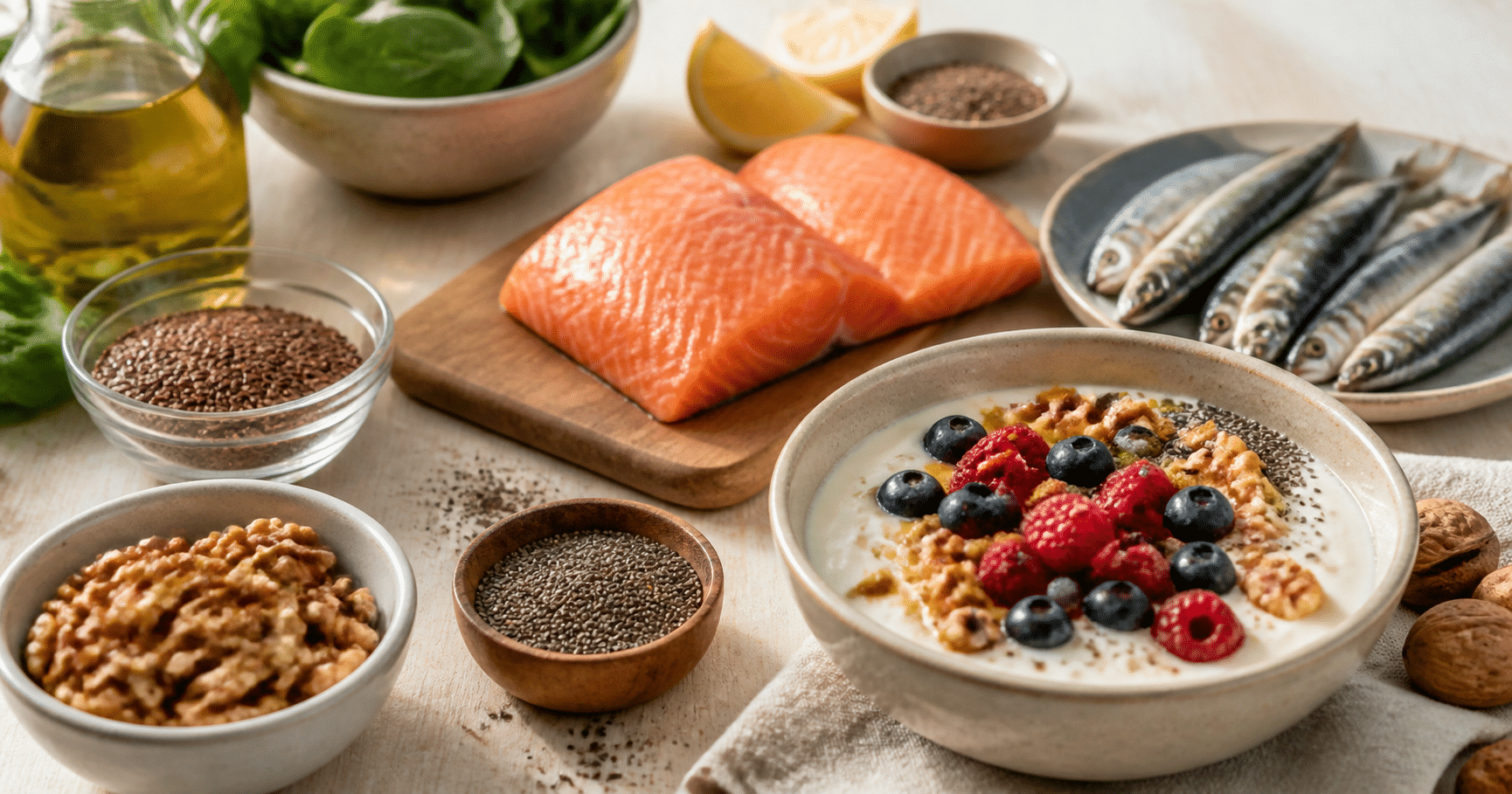
This quick yogurt bowl combines chia and walnuts for ALA. It’s a snack or breakfast, not a treatment or a substitute for seafood’s EPA and DHA.
Ingredients
-
- 3/4 cup plain yogurt
-
- 1 tablespoon chia seeds
-
- 1 tablespoon chopped walnuts
-
- 1/2 cup berries, fresh or thawed
-
- Optional: a little honey or cinnamon
Step-by-Step Instructions
-
- Spoon the yogurt into a bowl and stir in the chia seeds.
-
- Let it sit for 5 to 10 minutes so the seeds begin to soften.
-
- Top with berries and walnuts. Add cinnamon or a small drizzle of honey if you like.
For a softer, pudding-like texture, mix the yogurt and chia seeds the night before and refrigerate in a covered container. Add the walnuts and berries just before eating.
Make the Food Choice Match the Omega-3
If you want EPA and DHA, choose seafood such as salmon, sardines, or trout. If you’re looking for plant-based ALA, reach for chia, ground flaxseed, or walnuts—and use them regularly rather than relying on a single sprinkle now and then.
The simplest approach is variety: include seafood during the week if you eat it, and keep plant sources in the rotation either way. A handful of walnuts or a spoonful of seeds is an easy start; a fish dinner now and then adds a different kind of omega-3.