Many people try to eat better by focusing on what to cut: less salt, fewer sweets, smaller portions. A simpler place to start is the other side of the plate. Add one plant food to each meal, and an ordinary day can include more colors, textures and kinds of fiber without requiring a dramatic menu makeover.
“Plant food” can mean more than a salad. It might be berries stirred into oatmeal, beans added to soup, or a handful of chopped vegetables beside dinner. The idea is not to make every meal vegetarian or to chase a perfect number. It is to make room for foods that might otherwise be missing.
There is one useful distinction: eating the same plant at every meal adds it to the menu, but does less to broaden the range of foods you eat. A few small changes across the day can bring in a wider mix. Here’s why that variety matters, how to make it practical, and a flexible bowl recipe to get started.
Why one small addition can make a meal more varied
Plant foods offer different combinations of fiber, vitamins, minerals and naturally occurring compounds. Beans, for example, bring fiber and plant protein; fruit contributes its own mix of fiber and nutrients; whole grains, nuts, seeds and vegetables each add something different. No single food supplies everything, and variety is a straightforward way to widen the mix.
Fiber is one reason variety gets attention. Different plant foods contain different types of fiber, which can support digestion and help make meals satisfying. Gut microbes also use some fibers, but research on the gut microbiome is still developing. Adding a plant food is a sensible eating habit, not a guaranteed way to produce a specific health outcome.
The approach works best as an addition, not a swap that leaves a meal less balanced. A spoonful of berries can round out breakfast; beans can make a vegetable soup more substantial. And if a meal already includes a plant food, the next opportunity is simply to choose a different one.
Three ways to make the habit stick
1. Count more than produce
Fresh fruit and vegetables are easy choices, but the category also includes beans, lentils, peas, whole grains, nuts and seeds. Herbs and spices add plant variety and flavor, too, though a sprinkle of parsley is not a stand-in for a serving of vegetables or beans.
2. Use what is convenient
Fresh is not the only useful option. Frozen vegetables and fruit can be ready when you need them; canned beans are a quick way to add legumes. If you are watching sodium, look for no-salt-added options or rinse canned beans under water.
3. Build up gradually
If you currently eat little fiber, adding several high-fiber foods at once may cause gas or bloating. Start with a manageable amount and increase gradually. Drinking enough fluids also matters as you add fiber, unless a clinician has advised you to limit fluids.
A flexible bowl for lunch or dinner
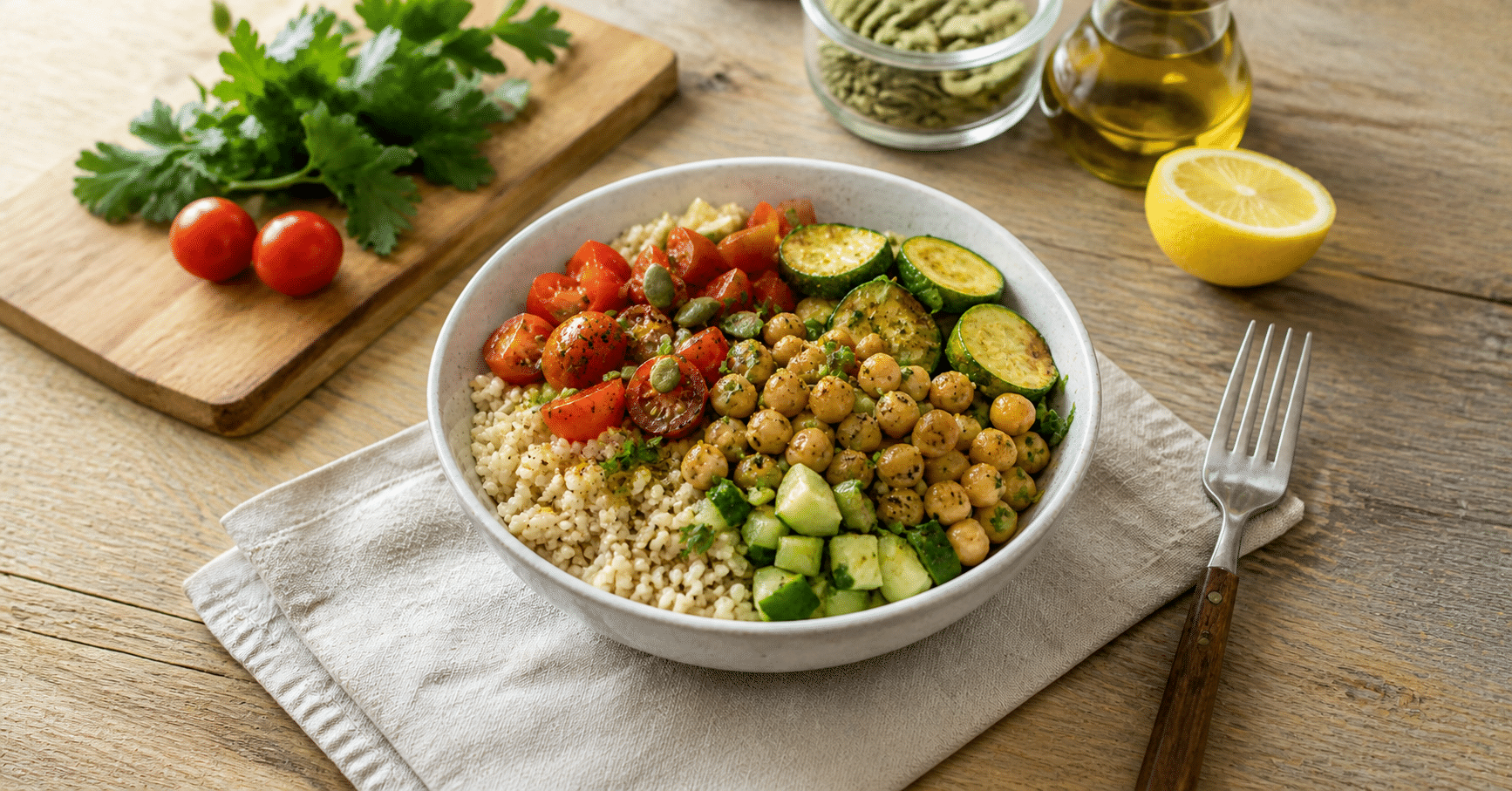
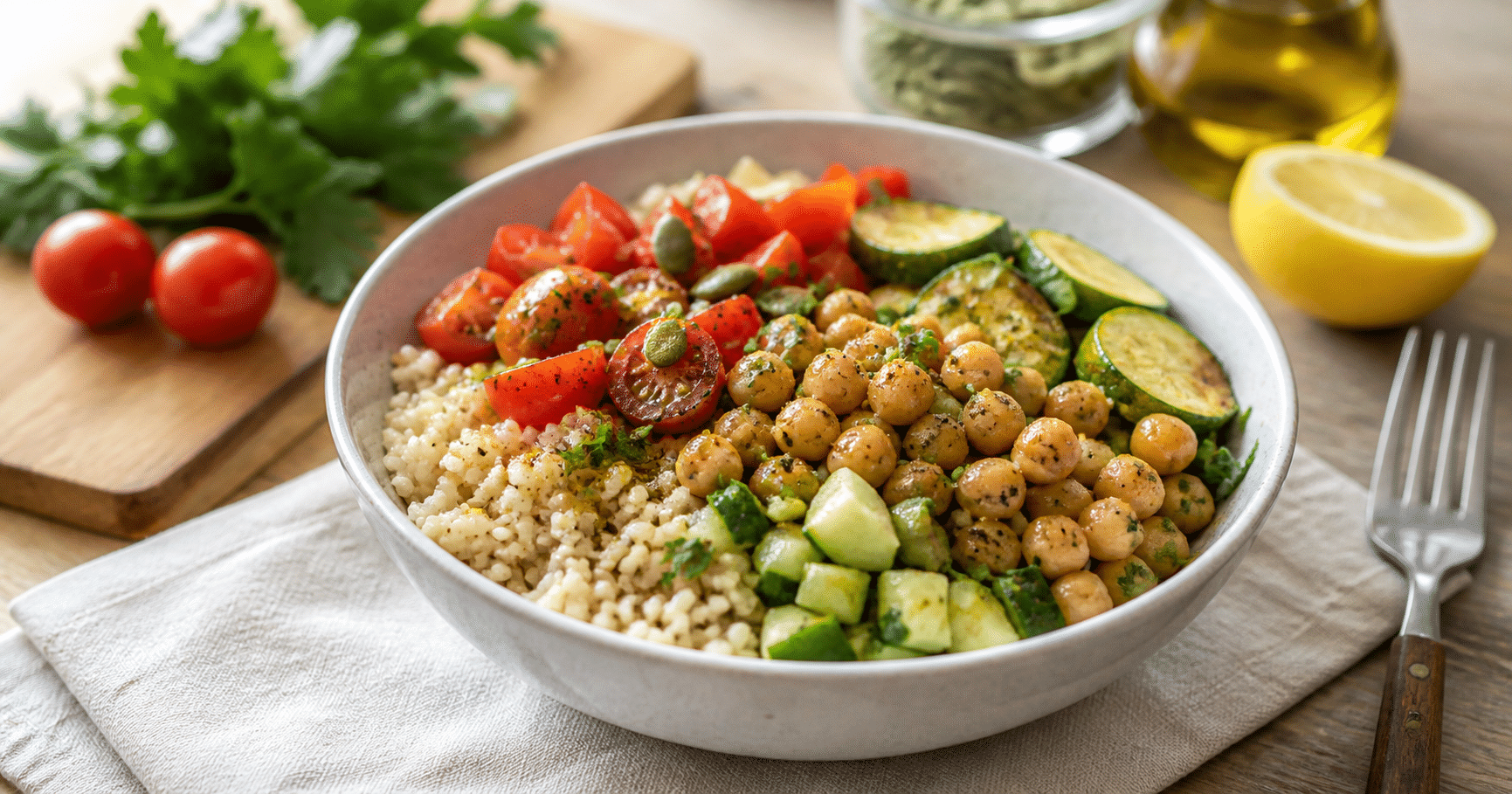
This mix-and-match bowl is one easy way to add a plant food to a meal—or several at once. It takes about 10 minutes if the grain is already cooked, and makes one generous serving.
What You’ll Need
-
- 1 cup cooked brown rice, barley or quinoa
-
- 1/2 cup rinsed canned chickpeas or beans
-
- 1 cup chopped vegetables, such as tomatoes, cucumber, bell pepper or leftover roasted vegetables
-
- 1 tablespoon pumpkin or sunflower seeds (optional)
-
- 1 tablespoon olive oil
-
- 1 tablespoon lemon juice or vinegar
-
- Black pepper, plus herbs or spices to taste
Step-by-Step Instructions
-
- Warm the cooked grain and chickpeas in the microwave or in a small pan. If using raw vegetables, keep them cool for a contrast in texture.
-
- Whisk the olive oil with lemon juice or vinegar and black pepper.
-
- Arrange the grain, chickpeas and vegetables in a bowl. Spoon the dressing over the top and finish with seeds or herbs, if using.
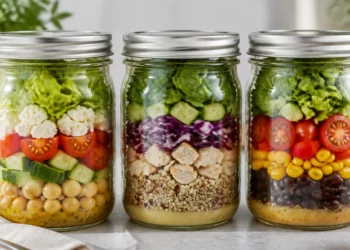
For a different version, use lentils instead of chickpeas, add shredded cabbage in place of cucumber, or swap the grain for a baked potato. Refrigerate leftovers promptly in a covered container and use within a few days; keep the dressing separate if you want the vegetables to stay crisp.
Easy additions for breakfast, lunch and dinner
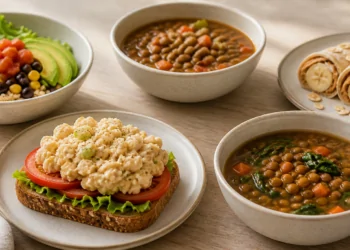
You do not need to cook a separate dish for every meal. Try adding berries or sliced pear to oatmeal, putting spinach or beans into eggs, or topping yogurt with chopped fruit and a few nuts. At lunch, stir peas or beans into soup, or add grated carrot to a sandwich. At dinner, serve a vegetable you do not usually buy or spoon lentils into pasta sauce.
Think of the addition as a small building block, not a test you can fail. If you have a medical condition that requires limits on particular foods—such as certain potassium or phosphorus limits for kidney disease—follow the advice of your health care team when choosing additions.
Let variety be the goal, not perfection
Adding one plant food to a meal is a practical prompt to broaden what you eat. Choose foods you enjoy, make use of frozen and canned options, and rotate your choices when it is convenient. The most useful plant food is often the one you will actually keep on the menu.