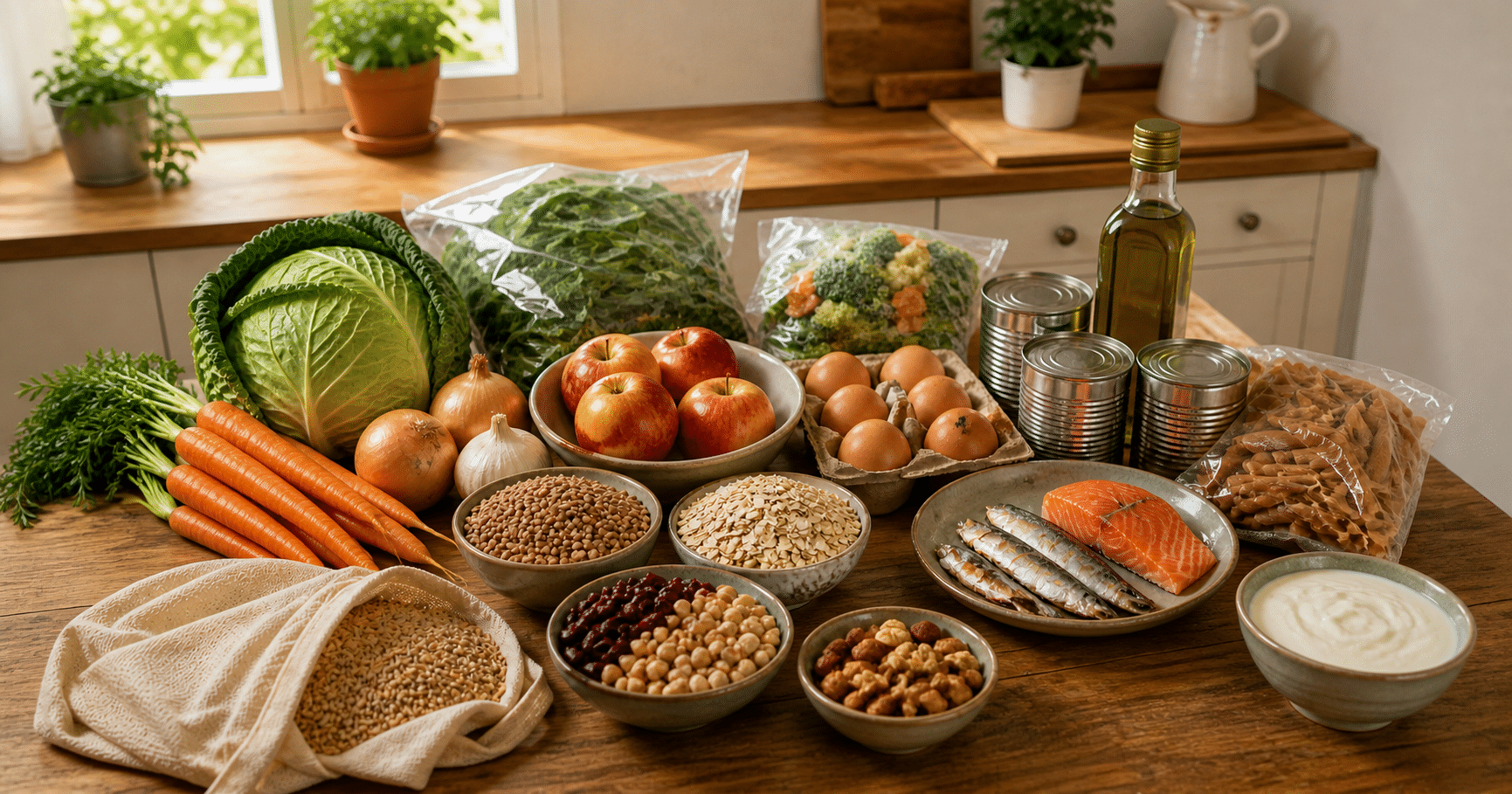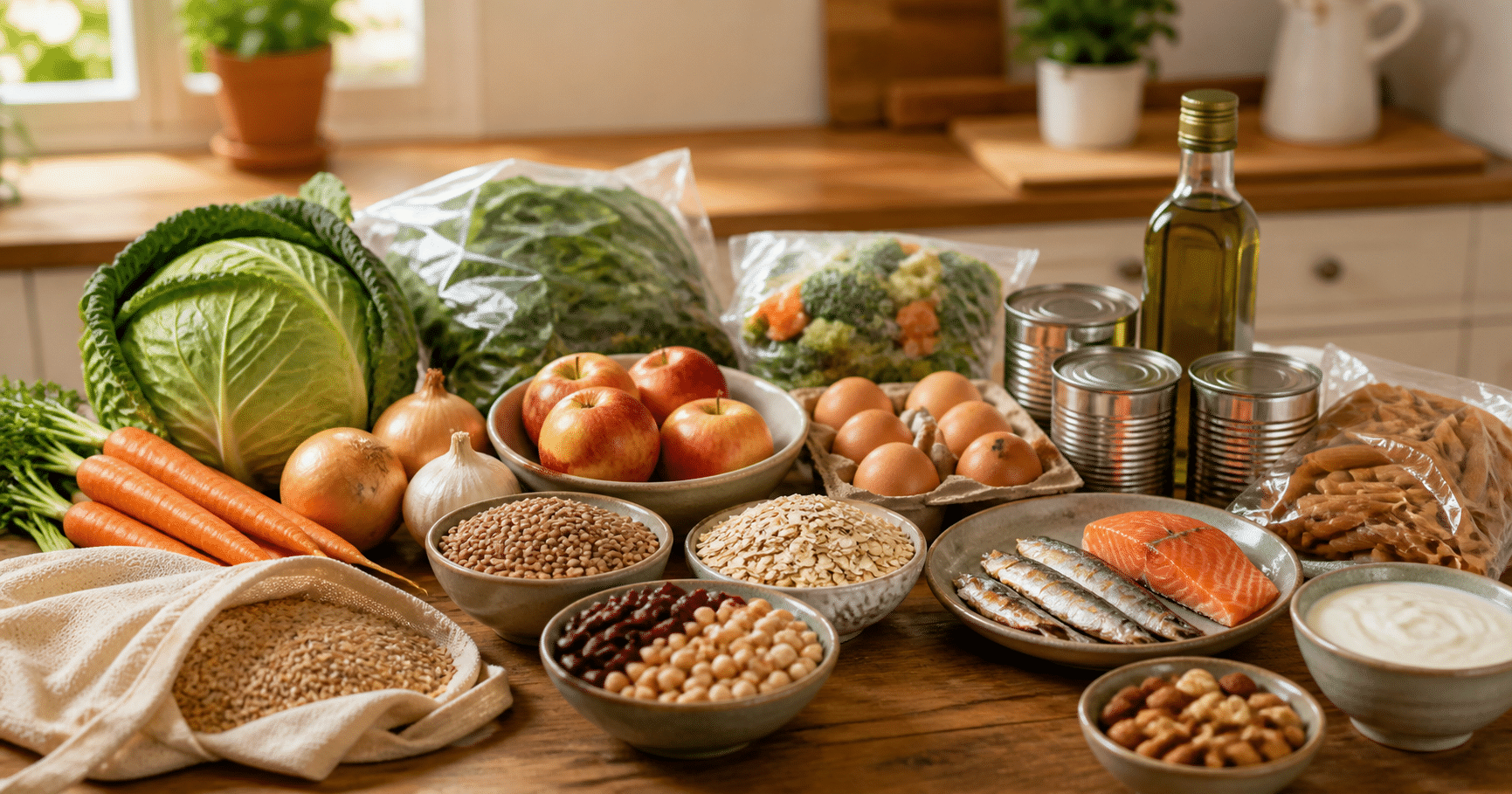
A Mediterranean-style grocery list does not need imported olives, specialty grains, or a seafood dinner every night. Its most useful staples are often the least glamorous—and the least expensive: beans, oats, brown rice, cabbage, carrots, canned tomatoes, and a little olive oil.
The phrase “Mediterranean diet” describes an overall way of eating, not a strict menu or a shopping list of costly regional products. Meals tend to emphasize vegetables, fruit, beans, whole grains, nuts, and unsaturated fats, with fish, eggs, poultry, and dairy used in moderate amounts.
One common budget mistake is buying ingredients for a different recipe every night. A short list of versatile foods can go further: the same beans can become soup, a grain bowl, or a salad, while a bag of greens can serve as a side dish and a lunch base.
Here’s how to make a practical Mediterranean-style grocery list, plan around affordable staples, and shop in a way that makes the food easier to use before it spoils.
Build the list around foods, not fancy recipes
Mediterranean-style eating is less about a particular ingredient than the pattern on the plate. Vegetables, fruit, legumes, and whole grains form much of the foundation; olive oil, nuts, seeds, and fish can add unsaturated fats. You do not need every food at every meal, and no single ingredient makes a diet “Mediterranean.”
That flexibility is good news for a grocery budget. Dried or canned beans can stand in for some meat-based meals, and frozen vegetables can fill in when fresh produce is expensive or likely to go unused. Canned tomatoes, oats, brown rice, and whole-wheat pasta are also useful pantry basics because they can anchor many different meals.
Think in building blocks: choose a few vegetables, one or two fruits, a couple of filling grains, beans or lentils, and modest portions of protein such as eggs, canned fish, or chicken when affordable. Then make a short plan for how those foods will appear across the week.
Four ways to make the cart go further
1. Let beans and lentils do more of the work
Beans and lentils are versatile sources of plant protein and fiber. Dried versions usually cost less per serving, but canned beans are convenient and can be a smart buy when time or energy is limited. Rinsing canned beans under running water can reduce some of their sodium.
Use them in soup, toss them with vegetables and grains, or add them to pasta sauce. If you enjoy meat, try using a smaller amount alongside beans rather than making meat the centerpiece of every dinner.
2. Choose produce by season, price, and shelf life
Seasonal produce is often a better value, but the best choice is the one you will actually eat. Compare unit prices, and consider frozen vegetables and fruit when fresh options are costly. Frozen produce is typically picked and frozen soon after harvest, and it works well in soups, oatmeal, smoothies, and cooked dishes.
For fresh items, combine quick-use choices such as salad greens with longer-lasting ones such as cabbage, carrots, onions, and apples. That mix helps prevent the familiar end-of-week discovery of wilted produce at the back of the refrigerator.
3. Buy fish strategically
Fish is part of many Mediterranean-style eating patterns, but it does not have to be fresh or expensive. Canned salmon, sardines, or tuna can be useful pantry options; compare prices and sodium, and choose varieties that fit your preferences. Frozen fish may also be less costly than fresh, depending on the store and season.
There is no need to buy several kinds at once. One fish-based meal during the week can add variety, while beans, eggs, or poultry can fill other protein needs.
4. Spend carefully on oils, nuts, and extras
Olive oil is a familiar Mediterranean-style cooking fat, but a meal does not need to be drenched in it to fit the pattern. Use a measured drizzle for roasting or dressing, and compare prices by unit rather than choosing a bottle based on its label alone. If olive oil is beyond your budget, use an affordable unsaturated vegetable oil for some cooking.
Nuts and seeds are nutritious but can add up. Buy a small amount, use them as a topping, or look for store brands and unsalted options. Treat specialty vinegars, imported spreads, and snack foods as optional—not essential items.
A budget-friendly grocery list for two
This sample list is designed to support several simple meals, not a rigid seven-day menu. Adjust quantities for appetites, pantry supplies, and how often you eat at home. Prices vary by location, season, and store, so check unit prices and use what is already in your kitchen first.
What to put in the cart
-
- Produce: 1 cabbage or bag of seasonal greens; 1 pound carrots; 2 onions; 1 head garlic; 2–3 additional vegetables on sale, such as zucchini, broccoli, or bell peppers; 4–6 pieces of seasonal fruit; 1 bag frozen vegetables.
-
- Beans and grains: 2 cans beans or about 1 pound dried beans; 1 cup dried lentils; 1 container oats; 1 pound brown rice or another whole grain; 1 package whole-wheat pasta.
-
- Pantry basics: 2 cans tomatoes; 1 small bottle olive oil if needed; vinegar or lemons for dressing; dried herbs or spices you already use.
-
- Protein and dairy: 1 dozen eggs; 2 cans fish or a small package of frozen fish; plain yogurt or milk, if you use them.
-
- Optional: A small bag of nuts or seeds, or a modest amount of feta or another flavorful cheese.
This list can support lentil soup, bean-and-rice bowls, pasta with tomato and vegetables, eggs with greens, and a meal with canned or frozen fish. Repeating a few ingredients is a feature, not a failure: it makes the food easier to use and the shopping list easier to manage.
Turn the list into a workable week
Step-by-step planning
-
- Check your pantry and freezer. Cross off rice, oil, spices, or canned goods you already have. Duplicate purchases are an easy way to overspend.
-
- Choose three or four flexible meals. For example, plan lentil soup, bean bowls, vegetable pasta, and eggs with greens. Leave room for leftovers or a simple meal out of what remains.
-
- Use ingredients more than once. Roast extra vegetables for lunch, cook enough grains for another meal, and save part of a can of tomatoes for a second dish if you can store it safely in a covered container in the refrigerator.
-
- Shop with a substitution in mind. If broccoli is expensive, check frozen broccoli or another sale vegetable. If fish is out of budget, choose eggs or beans for that meal.
-
- Prep only what you can use. Wash and chop sturdy vegetables, cook a batch of grains or lentils, and keep more delicate produce whole until needed.
A useful budget rule: plan the meals first, then buy the ingredients—not the other way around.
A Mediterranean-style list can be simple
A budget-friendly Mediterranean-style grocery list is built on flexible staples, not expensive specialty foods. Start with beans, whole grains, seasonal or frozen produce, and a few affordable protein choices; add olive oil, nuts, or fish in amounts that fit your budget.
The best list is one that matches your kitchen and gets eaten. A handful of reliable ingredients, used in several easy meals, can make this way of shopping both practical and enjoyable.