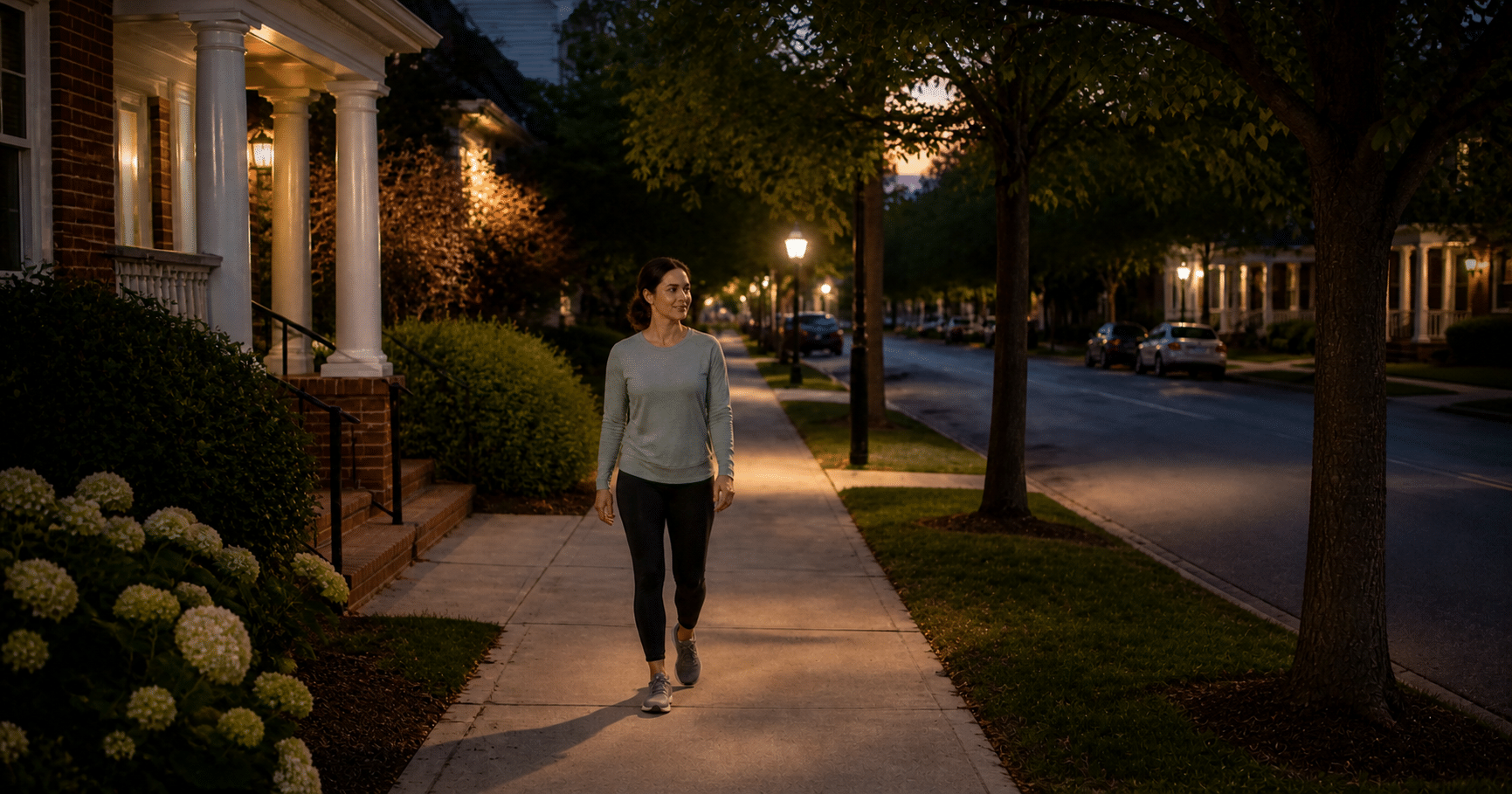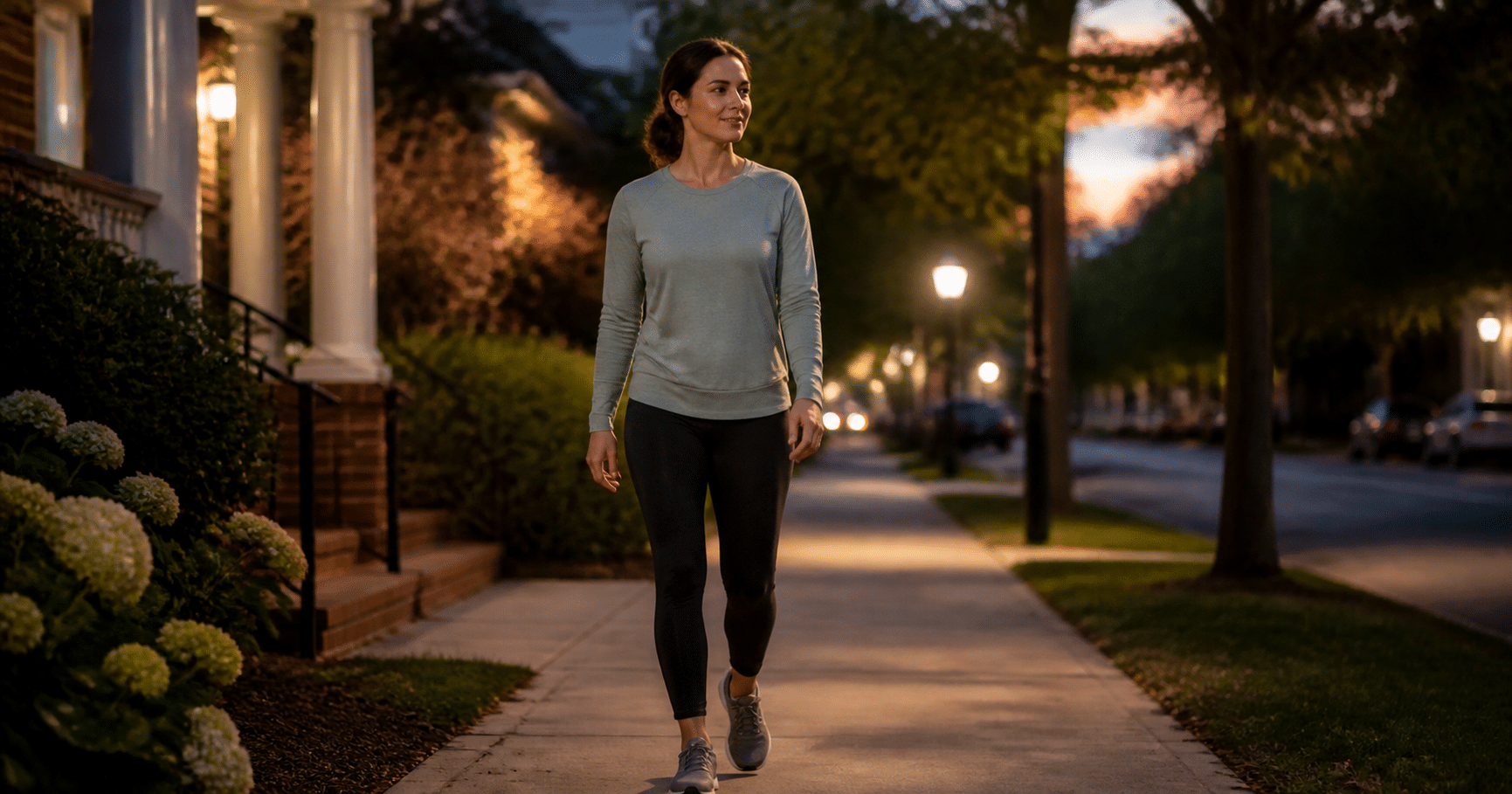
A short walk after dinner can feel like a simple way to ease a heavy, sluggish feeling—and for many people, it is. The key is keeping it gentle. A relaxed stroll is different from a brisk workout, which may leave you uncomfortable when your stomach is full.
Walking does not make dinner disappear faster, and it is not a treatment for indigestion. But light movement can encourage normal gut activity, help some people feel less sedentary after a meal, and may have a useful effect on blood sugar after eating.
How soon should you head out, and how long is enough? Here’s what a post-dinner walk may realistically do, what it cannot promise, and how to make it comfortable—especially if you are managing reflux, balance concerns, or a large evening meal.
What a Gentle Walk Can—and Can’t—Do for Digestion
After a meal, the stomach gradually mixes food with digestive juices and passes it into the small intestine. That process takes time; walking does not speed it up in a predictable way. Still, easy movement can support the body’s usual patterns of gut motility—the muscular contractions that move contents through the digestive tract.
Regular physical activity is associated with better bowel function, and some people find that moving around helps them feel less bloated or sluggish than sitting still. The response varies, though. A walk may be pleasant and helpful for one person while making another feel too full, particularly after a large or rich dinner.
There is another potential benefit beyond digestion: research on post-meal activity suggests that even brief, light movement can help moderate the rise in blood sugar after eating. That does not mean a walk replaces diabetes care or guarantees a particular result. It is simply a practical way to add movement to the day.
Three Reasons to Keep the Stroll Easy
1. Gentle movement may feel better than sitting still
A comfortable walk gets you upright and moving without asking your body to handle intense exertion. If you tend to feel overly full after dinner, try a slow pace and notice whether it eases that heavy feeling. If walking makes your symptoms worse, stop and try a shorter or later stroll another day.
2. A short walk can break up long periods of sitting
The after-dinner walk does not need to be a workout to count as useful movement. A few minutes around the block, through a hallway, or on a safe indoor route can be an easy way to avoid settling into a chair immediately after eating. Consistency matters more than turning every stroll into a fitness challenge.
3. A brisk workout is not the same thing
Running, fast uphill walking, or vigorous exercise soon after a meal can feel uncomfortable and may aggravate reflux for some people. If you want a more demanding workout, give your body more time after dinner and follow what feels comfortable. The goal here is a relaxed walk, not pushing through discomfort.
How to Try a Post-Dinner Walk
There is no single ideal schedule. Start with a pace that lets you talk comfortably, and adjust the timing and duration to suit your meal and how you feel.
What You’ll Need
-
- Comfortable, supportive shoes
-
- A safe, well-lit route, indoors or outside
-
- Optional: a walking aid you already use for balance or mobility
Step-by-Step Instructions
-
- Give yourself a moment after dinner. If you feel very full, wait until you are comfortable enough to move. There is no requirement to start immediately.
-
- Begin with 5 to 10 minutes. Walk at an easy pace on level ground. If that feels comfortable over several outings, you can gradually extend the walk to 10 or 15 minutes.
-
- Stay upright and relaxed. Keep the pace conversational. Avoid steep hills or vigorous intervals if your stomach feels unsettled.
-
- Pay attention to symptoms. Slow down or stop if you develop pain, nausea, dizziness, unusual shortness of breath, or worsening heartburn.
-
- Make it easy to repeat. A safe indoor route or a short loop close to home can be more practical than planning a long walk every evening.
If You Have Reflux or Balance Concerns
For some people with reflux, staying upright after a meal feels better than lying down. A gentle walk may suit them, but it is not a guaranteed way to prevent heartburn. Large meals, personal food triggers, and lying down soon after eating can also matter. If walking brings on reflux, keep it slower, wait longer after dinner, or skip the stroll.
Safety comes first, especially at night. Choose a familiar, even route with good lighting, and use your usual mobility aid if needed. If outdoor walking is unsteady, a few easy laps indoors may be a better option—or simply standing and moving around the home.
Persistent indigestion, frequent heartburn, or ongoing changes in bowel habits deserve attention rather than being managed with walking alone. Seek medical advice for symptoms that are new, worsening, or interfering with daily life. Sudden severe chest or abdominal pain, fainting, or trouble breathing calls for urgent care.
A Small Walk, Not a Digestion Cure
A short, easy walk after dinner may help you feel more comfortable and adds useful movement to the day. It will not force food through your system or work the same way for everyone, so let comfort—not a strict clock—guide you.
Start small, keep the route safe, and think of the walk as a gentle transition after dinner. Sometimes the most useful wellness habit is the one that feels pleasant enough to keep doing.