A crisp salad can look like the picture of a healthy lunch and still leave you bloated, crampy, or rushing to find a comfortable chair. If raw vegetables regularly cause trouble, you don’t have to choose between discomfort and eating well.
For many people, the issue is less about vegetables being “bad” and more about texture, portion size, and the kinds of carbohydrates their gut has to handle. A big bowl of raw broccoli, cabbage, and onion can be a very different digestive challenge from a small serving of tender cooked carrots.
Cooking won’t make every vegetable easier for every person, and it doesn’t erase fiber. But a few thoughtful changes can make vegetables more comfortable to eat while keeping them in the picture. Here’s how to find a gentler approach—and a simple warm vegetable bowl to try.
Why Cooked Vegetables May Feel Easier to Digest
Heat softens plant cell walls, so cooked vegetables are generally more tender and require less chewing than raw ones. That can make a difference if you have dental concerns, find crunchy foods uncomfortable, or simply feel better eating softer meals. Cooking also shrinks vegetables, making it easier to eat a moderate portion without realizing it.
Fiber is part of the story, too. Some types are fermented by gut bacteria, which can produce gas. Certain vegetables—including onions, cauliflower, cabbage, and broccoli—can bother some people more than others, especially in large servings. Rawness alone doesn’t explain every reaction; the vegetable, amount, preparation, and individual gut all matter.
Cooking changes texture, but it does not remove all fiber or guarantee that a food won’t cause symptoms. A gradual, practical experiment is more useful than banning every vegetable that once caused discomfort: try a smaller serving, cook it until tender, and notice how you feel.
Four Ways to Make Vegetables More Comfortable
1. Begin with a small, tender serving
Instead of a large salad or heaping side dish, start with about half a cup of cooked vegetables. Eat slowly and give yourself time to notice how you respond. If that goes well, increase the amount gradually rather than doubling it at the next meal.
2. Choose cooking methods that soften without adding heaviness
Steaming, simmering, roasting, or sautéing until vegetables are tender can all work. If greasy foods also bother you, use a modest amount of oil rather than deep-frying. Soups and stews are another useful option because the vegetables cook until soft and are easy to portion.
3. Peel or remove tough parts when helpful
Peeling carrots or removing thick stems and tough skins can make a meal easier to chew. You might also try zucchini without its skin or well-cooked spinach. These adjustments are not necessary for everyone, but they can help when texture is the main problem.
4. Keep a simple food-and-symptom note
Write down the vegetable, approximate portion, preparation, and symptoms. This can help reveal whether the pattern is tied to a particular food, a very large serving, or a combination such as raw vegetables plus beans and a fizzy drink. Change one thing at a time so the pattern is easier to interpret.
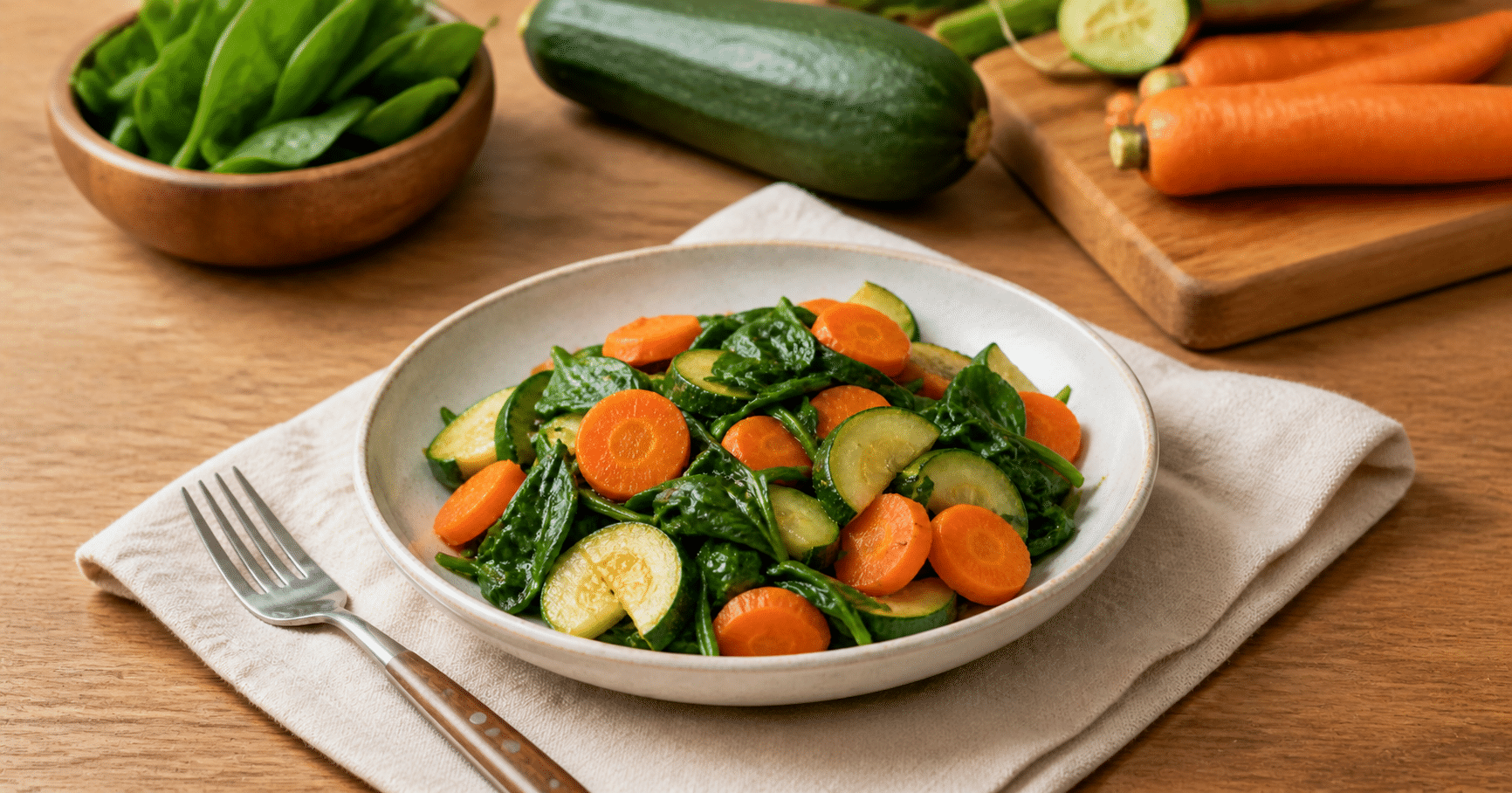
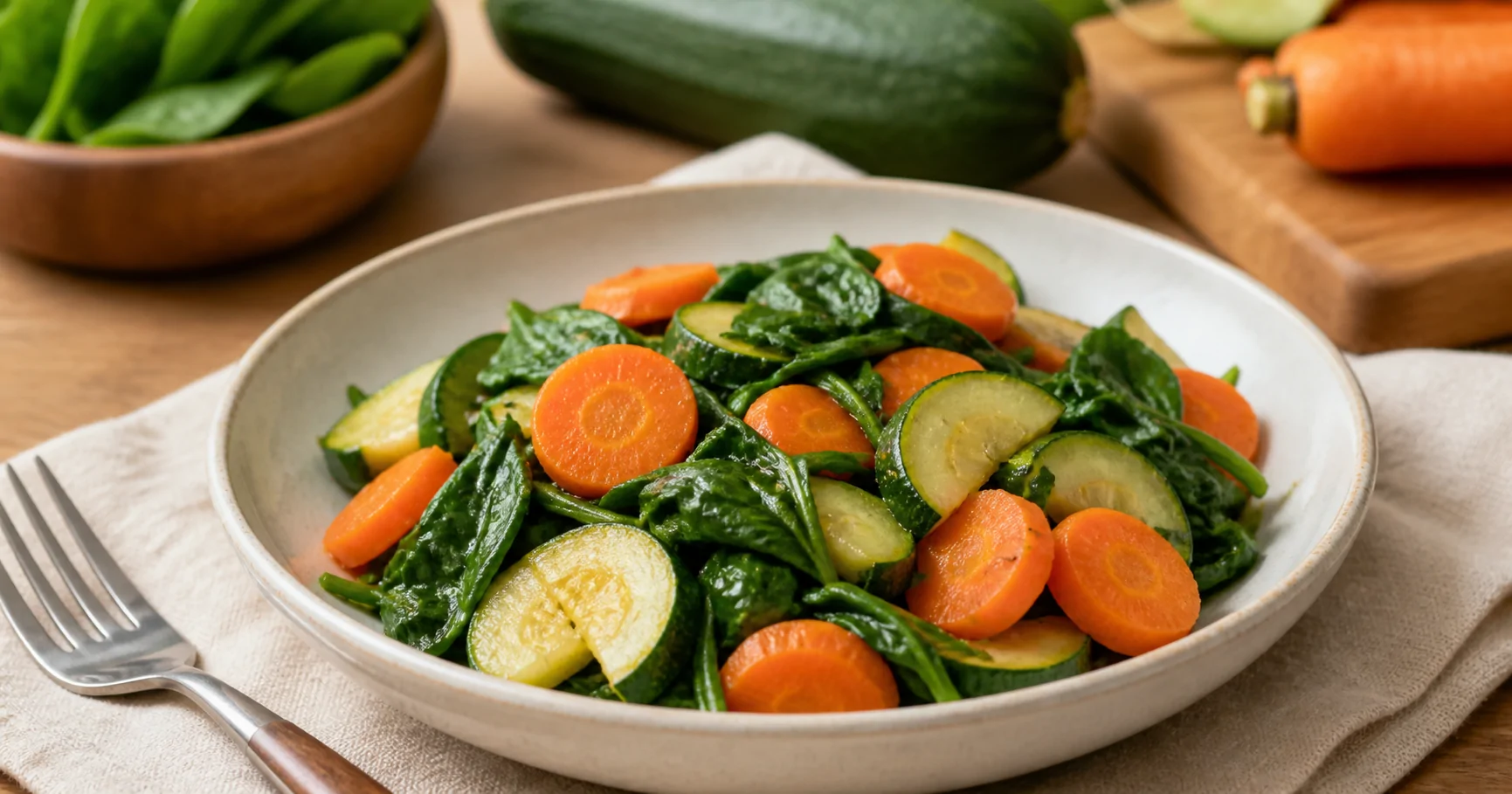
A Gentle Warm Vegetable Bowl
This simple side dish makes about two servings. The vegetables cook until tender, and the mild seasoning lets you assess how you tolerate the ingredients. If you already know one of them triggers symptoms, leave it out or substitute a vegetable you usually handle well.
Ingredients
-
- 1 medium carrot, peeled and sliced into thin rounds
-
- 1 small zucchini, sliced
-
- 1 cup fresh spinach
-
- 1 teaspoon olive oil
-
- 2 tablespoons water
-
- Pinch of salt, if desired
-
- 1 teaspoon lemon juice, optional
Step-by-Step Instructions
-
- Warm the olive oil in a skillet over medium-low heat. Add the carrot and water, then cover and cook for about 5 minutes.
-
- Add the zucchini, cover again, and cook for another 4 to 6 minutes, stirring once or twice. The vegetables should be soft enough to pierce easily with a fork. Add a splash more water if the pan becomes dry.
-
- Stir in the spinach and cook for 1 to 2 minutes, just until wilted. Season lightly and add lemon juice if you like.
-
- Serve warm, starting with a modest portion. Refrigerate leftovers promptly in a covered container and use within 3 to 4 days.
Serve the vegetables alongside eggs, fish, chicken, tofu, or a grain such as rice. If you’re testing your tolerance, keep the rest of the meal familiar rather than adding several new ingredients at once.
Keep Variety Without Forcing Raw Salads
Vegetables can contribute fiber, vitamins, and minerals whether they’re raw or cooked. A useful goal is not to make yourself eat a particular salad, but to find forms you enjoy and tolerate: roasted carrots, soft green beans, blended vegetable soup, or cooked spinach stirred into eggs are all options.
If symptoms continue despite smaller portions and cooking, or if they are new, persistent, or worsening, discuss them with a health professional. Seek prompt medical advice for symptoms such as blood in the stool, unexplained weight loss, severe pain, or repeated vomiting. A change in digestion deserves attention, especially when it doesn’t settle.
Comfort Counts, Too
Raw vegetables are not a requirement for a nutritious diet. Start with small portions of tender cooked vegetables, pay attention to your own patterns, and build from there. The best healthy meal is one you can enjoy—and feel comfortable eating.