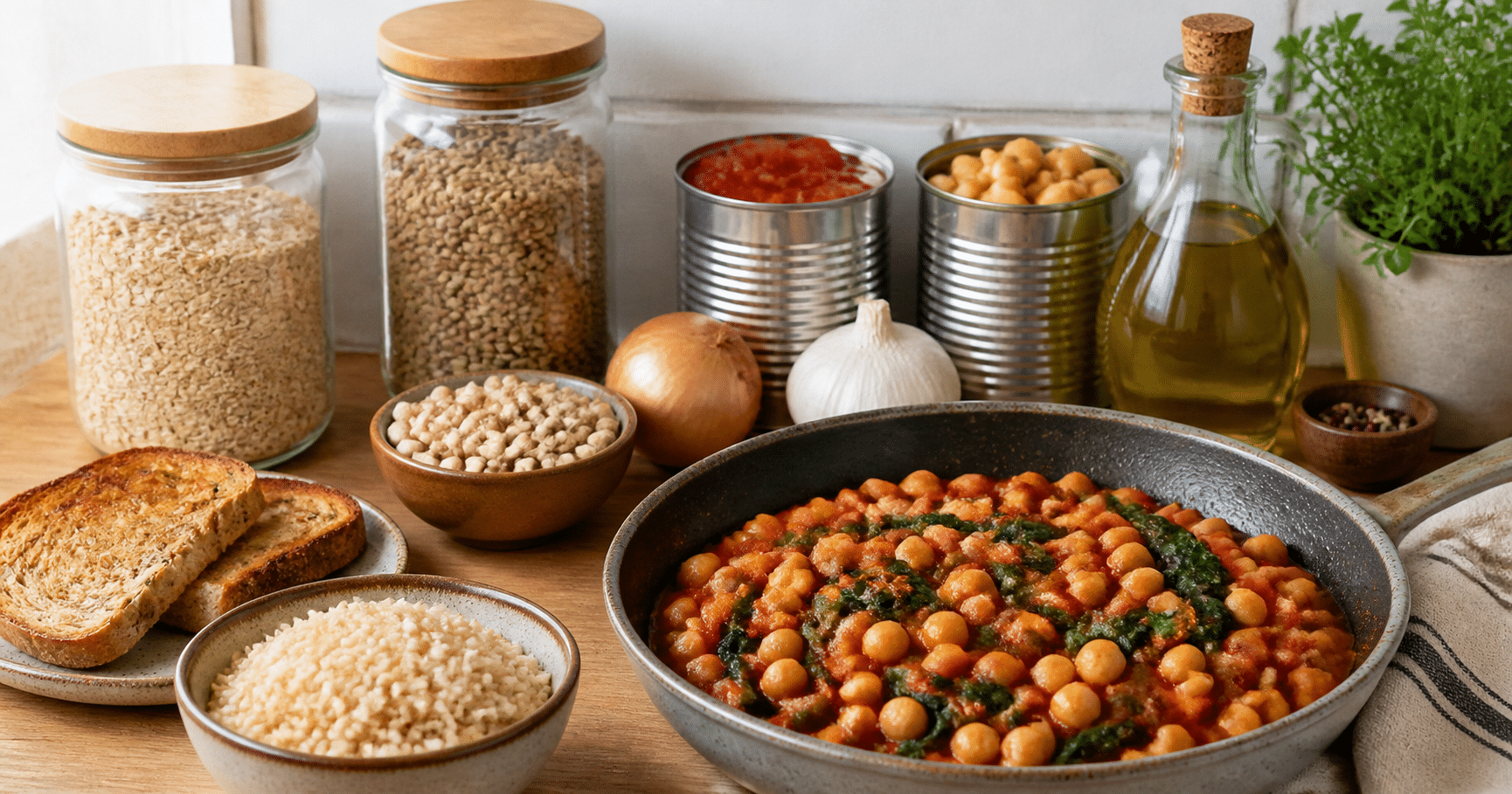
A well-stocked pantry can make the difference between a balanced dinner and another night of wondering what to eat. A few dependable ingredients—beans, whole grains, canned tomatoes, spices and a good cooking oil—can turn simple combinations into filling meals without a special trip to the store.
The trick is choosing staples that do more than sit on a shelf. Some provide protein or fiber; others add flavor, help a meal come together quickly or make vegetables more satisfying. And a label detail such as sodium content can matter more than the package’s healthy-sounding claims.
You don’t need a large pantry or an elaborate meal plan. A small collection of versatile ingredients, plus a few items from the freezer, can support easy breakfasts, lunches and dinners.
Here’s what to keep on hand, how to make those staples work together and a simple chickpea skillet to get dinner started.
Build a Pantry Around Ingredients That Work Together
A useful pantry is less about stocking every “superfood” and more about having ingredients that cover different jobs. Beans and lentils offer plant-based protein and fiber; whole grains provide a hearty base; canned fish can supply a quick protein option; and tomatoes, broth, oil and seasonings help turn those basics into a meal.
Fiber is one reason beans, lentils, oats and whole grains are worthwhile staples. It supports normal digestion, and foods rich in fiber can make meals more filling. If you’re increasing fiber, do so gradually and drink enough fluids; a sudden jump may cause digestive discomfort.
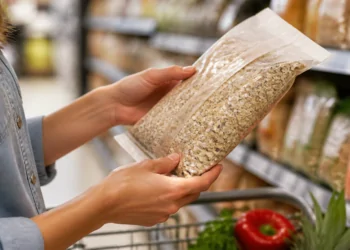
Convenience foods can fit, too. Canned beans and vegetables are often nutritious choices, but sodium levels vary by brand. Compare labels when you can, and rinse canned beans under running water to remove some of the surface salt. That won’t remove every bit of sodium, so checking the label still helps.
Five Staples That Make Healthy Meals Easier
1. Beans and lentils for a fast, filling base
Keep canned beans for quick meals and dried lentils for low-cost cooking. Chickpeas, black beans and cannellini beans can go into soups, salads, pasta or grain bowls. Lentils cook faster than many dried beans and don’t require soaking, making them useful for a weeknight pot of soup.
For canned beans, look for “no salt added” or lower-sodium options if that suits your needs. Rinsing and draining also helps freshen their flavor.
2. Whole grains for more than a side dish
Oats, brown rice, barley, quinoa and whole-wheat pasta can anchor a meal. Oats are handy for breakfast, while a pot of rice or barley can become the base for beans, vegetables or canned salmon. Choose grains you enjoy and will realistically cook; convenience matters if the goal is to use them regularly.
Check package directions, since cooking times differ. Quick-cooking oats and parboiled or quick-cooking brown rice can be useful when time is tight.
3. Canned tomatoes and broth for flavor and moisture
Canned diced tomatoes, crushed tomatoes and tomato paste can build the base of soups, stews and skillet meals. Broth adds savory flavor, but it can be high in sodium. Look for lower-sodium versions, or use water and add herbs, spices, garlic or a splash of vinegar for more flavor.
4. Canned fish and nut or seed butters for easy protein
Canned salmon, sardines or tuna can turn toast, pasta or a salad into a more substantial meal. Choose varieties that fit your preferences and check sodium on the label. Peanut butter, almond butter and tahini are also useful for oatmeal, sandwiches or quick sauces; compare ingredients and choose products with little or no added sugar when possible.
5. Oil, vinegar and spices to make basics taste good
Olive or canola oil, vinegar, dried herbs, black pepper, cumin, paprika and garlic powder can add character without relying on a heavy sauce. A little acid—such as lemon juice or vinegar—can brighten a dish, especially when beans or grains taste bland.
Make a 20-Minute Chickpea and Tomato Skillet
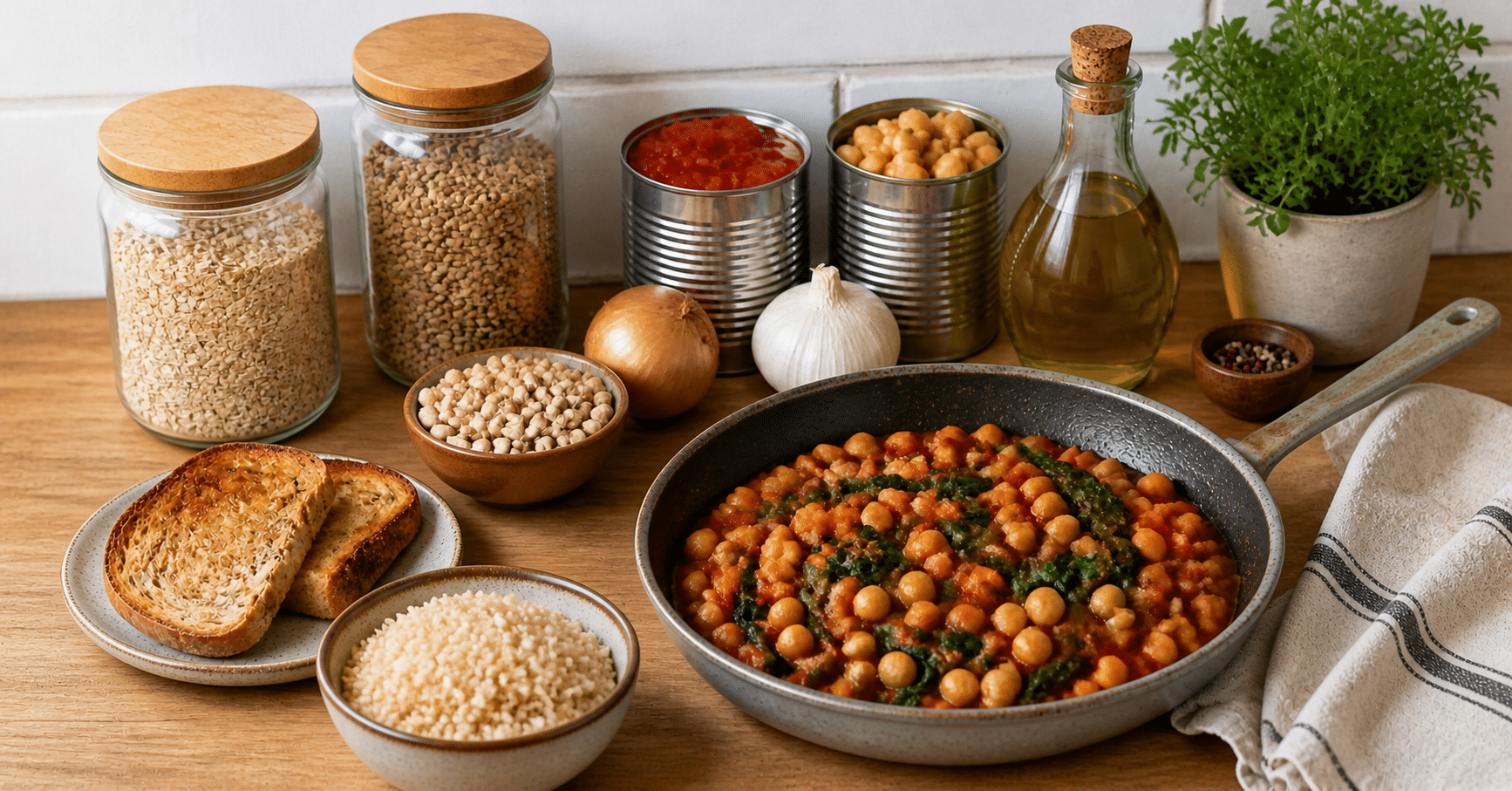
This flexible skillet uses canned chickpeas and tomatoes for a simple, savory meal. Serve it on its own, spooned over brown rice, or with whole-grain toast. Frozen spinach is a convenient addition, but you can leave it out or use another vegetable you have.
Ingredients
-
- 1 tablespoon olive oil
-
- 1 small onion, chopped, or 1 teaspoon onion powder
-
- 1 teaspoon garlic powder
-
- 1 teaspoon ground cumin
-
- 1 can (15 ounces) chickpeas, drained and rinsed
-
- 1 can (14.5 ounces) diced tomatoes, preferably no-salt-added
-
- 1 cup frozen spinach
-
- 1/4 teaspoon black pepper, or to taste
-
- 1 tablespoon vinegar or lemon juice
-
- Cooked brown rice or whole-grain toast, for serving
Step-by-Step Instructions
-
- Warm the olive oil in a large skillet over medium heat. If using fresh onion, cook it for 4 to 5 minutes, stirring occasionally, until softened.
-
- Add the garlic powder and cumin. Stir for about 30 seconds, just until fragrant.
-
- Stir in the chickpeas, diced tomatoes and black pepper. Bring the mixture to a gentle simmer.
-
- Add the frozen spinach. Cover and cook for 8 to 10 minutes, stirring once or twice, until hot throughout and the spinach is tender.
-
- Stir in the vinegar or lemon juice. Taste and adjust the seasoning, then serve over rice or with toast.
Refrigerate leftovers promptly in a covered container and use within three to four days. Reheat until steaming hot. The skillet also works as a filling for a baked potato or as a topping for cooked whole-wheat pasta.
Keep the Pantry Useful, Not Overstuffed
Choose a few ingredients from each category rather than buying every option at once. For example, keep two kinds of beans, one or two grains, canned tomatoes, a protein such as canned fish, and seasonings you already like. Add frozen vegetables when freezer space allows; they can be a practical alternative to fresh produce that might otherwise spoil.
Store dry goods in a cool, dry place and follow package guidance after opening. Put newer cans behind older ones so the items with the earliest dates get used first. A short list on the refrigerator—what you have, what needs replacing and one meal idea—can make the contents easier to use.
A helpful meal formula is a grain or other hearty base, a protein-rich ingredient, a vegetable and something flavorful: beans with rice, tomatoes and cumin; or oats with nut butter and fruit.
A Small Pantry Can Make a Big Difference
Healthy cooking gets easier when the ingredients are flexible, familiar and ready when you need them. Start with a few beans, whole grains, canned tomatoes, seasonings and a protein option, then build meals around what you enjoy.
The best pantry staple isn’t the trendiest one—it’s the ingredient you’ll actually reach for on a busy evening.