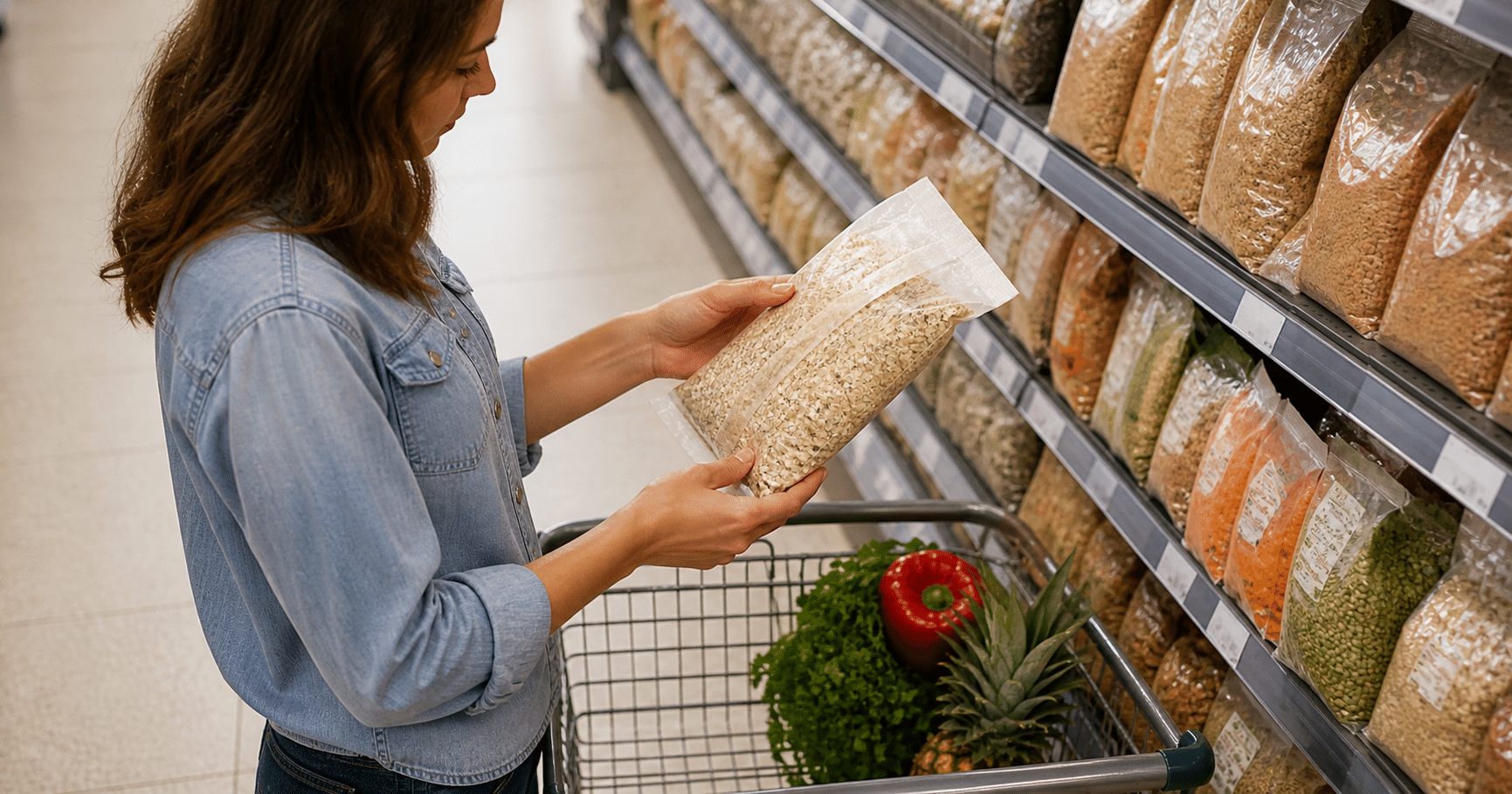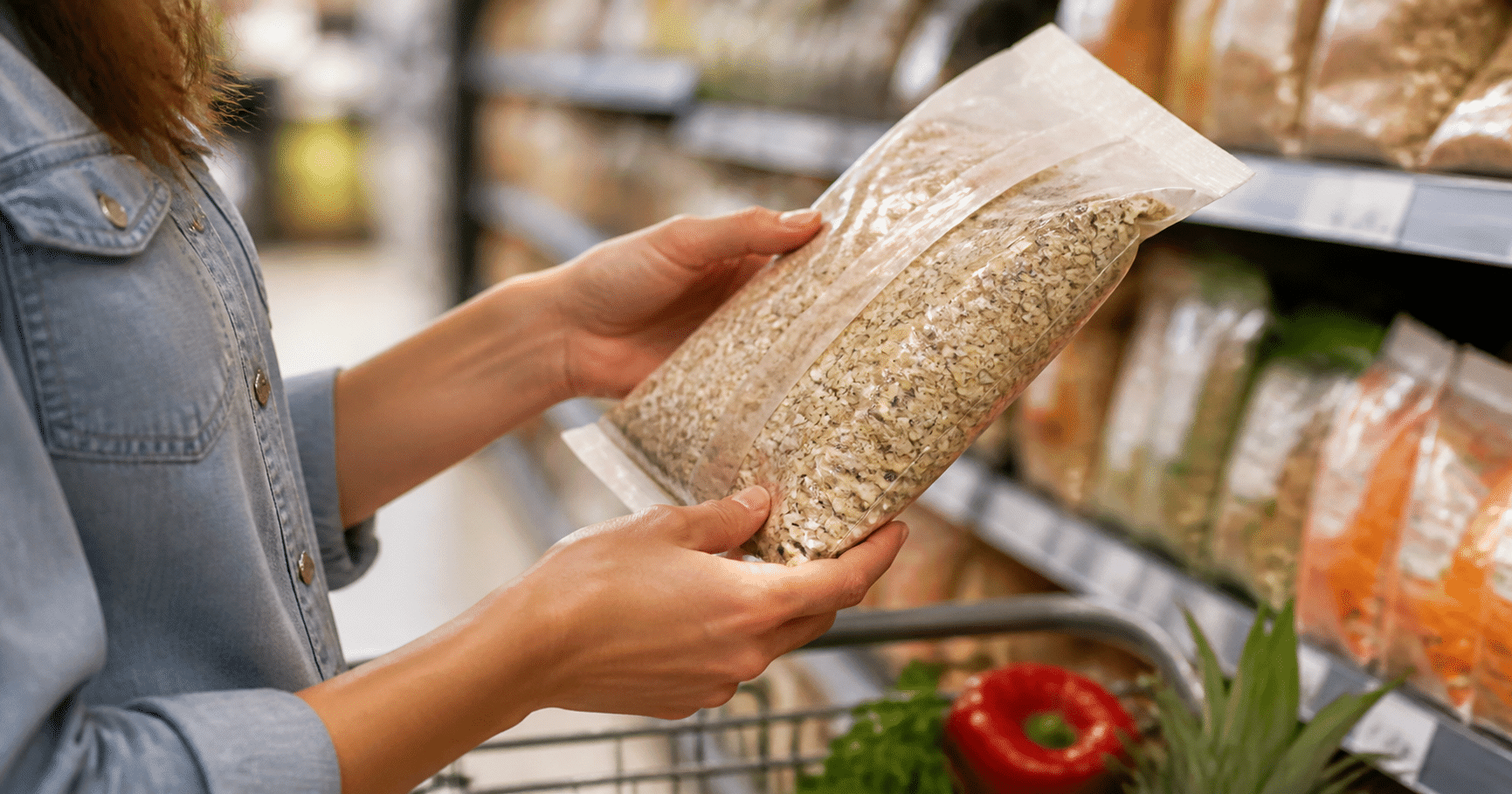
A loaf labeled “multigrain” may be made mostly with refined flour, while a humble bag of popcorn kernels contains a whole grain. The front of a package can sound wholesome without telling you how much of the grain is actually whole.
That distinction matters because whole grains retain the bran and germ—the parts removed when grains are refined. Those parts contribute fiber and nutrients, so a quick look at the ingredient list can tell you more than words such as “natural,” “stone-ground” or “seven-grain.”
Here’s how to recognize whole grains at the grocery store, which label terms are worth trusting, and what to check when you’re choosing bread, cereal, pasta, rice or snacks.
The Simple Definition: All Three Parts of the Grain Remain
A grain kernel has three main parts: the fiber-rich outer bran, the nutrient-containing germ and the starchy endosperm. A food counts as a whole grain when it contains all three in their original proportions, whether the grain is intact, cracked, rolled or ground into flour.
That means whole grains don’t have to look like brown, chewy kernels. Rolled oats, whole-wheat flour and cornmeal labeled “whole grain” can all qualify. Conversely, a grain can look hearty and still be refined if its bran and germ have been removed.
Whole grains provide fiber and naturally occurring nutrients, including B vitamins and minerals. Refined grains retain the endosperm but lose much of the bran and germ; enrichment may add back certain nutrients, but it does not restore the lost fiber. Eating whole grains is associated with better health outcomes in research, but no single grain or package label guarantees a particular result.
How to Read a Whole-Grain Label Without Guessing
1. Look for “whole” in the grain’s name
On an ingredient list, look for terms such as whole wheat, whole rye, whole oats, whole-grain corn or brown rice. “Whole-wheat flour” is different from “wheat flour”: the latter usually refers to refined flour unless the package says otherwise.
Ingredients are generally listed by weight, from most to least. If whole wheat is the first grain ingredient in a bread, it is a better sign than seeing enriched wheat flour first and a whole grain much farther down the list. Still, the ingredient list—not a single phrase on the front—is the best place to start.
2. Don’t assume “multigrain” means whole grain
“Multigrain” means a product contains more than one type of grain. Those grains may be whole, refined or a mixture. The same caution applies to “made with whole grains,” “seven-grain,” “stone-ground” and “wheat”: none of those phrases, by itself, tells you that all the grain is whole.
Color can mislead, too. Brown bread may get its color from ingredients such as molasses, while a genuine whole-grain bread can be fairly light. Check the ingredients rather than using color or a rustic-looking texture as proof.
3. Know the grains that commonly appear whole
These are often whole-grain choices when the product is made from the intact grain or clearly labeled whole grain:
- Oats, including steel-cut oats and old-fashioned rolled oats
- Brown rice and wild rice
- Quinoa, buckwheat, millet and amaranth
- Whole-grain cornmeal and popcorn
- Whole wheat and whole rye
Some familiar products are less straightforward. Pearled barley has had part of its bran removed, so it is not a whole grain. “Rye bread” does not necessarily mean whole rye; check whether the ingredient list says whole rye or rye flour.
4. Treat fiber as a clue, not a guarantee
A higher fiber number can help you compare similar products, but it does not prove that a food is made entirely from whole grains. Fiber can come from added ingredients, and whole-grain foods vary in fiber content. Look at the ingredient list first, then use the Nutrition Facts label to compare fiber, sodium, added sugars and serving sizes.
A Whole Grain Stamp, when present, is a voluntary labeling tool from the Whole Grains Council. It can provide additional information, but you can still make a good choice without it: identify the grain in the ingredient list and see whether it is named as whole.
A Quick Grocery-Aisle Check
When you’re comparing two similar products, use this short routine:
- Turn the package around. Start with the ingredient list, not the product name or color.
- Find the grain ingredient. Look for “whole” before the grain name, or a familiar whole-grain option such as brown rice or oats.
- Check what comes first. If the first grain ingredient is refined flour and whole grain appears later, the product may contain some whole grain but is not primarily whole grain.
- Compare the nutrition panel. Consider fiber, sodium and added sugars alongside your preference for taste, texture and price.
For example, a loaf labeled “multigrain” may list enriched wheat flour first, with oats and seeds later. Another loaf may list whole-wheat flour as its first grain ingredient. The second is the clearer whole-grain choice, even if the first looks darker or has more visible seeds.
Small Swaps Make Whole Grains Easier to Eat
You don’t have to overhaul your pantry. Try rolled oats at breakfast, brown rice or quinoa in a familiar bowl, whole-wheat pasta with a favorite sauce, or popcorn made from plain kernels. For bread and crackers, compare a few brands; whole-grain products vary widely in flavor, texture and sodium.
If you’re increasing fiber, do it gradually and drink enough fluids. A sudden jump can cause digestive discomfort for some people. And if a clinician has recommended a specific diet or fiber limit, follow that individualized advice rather than relying on a general grocery guide.
The Best Whole-Grain Clue Is on the Back
“Multigrain,” “brown” and “stone-ground” can be useful descriptions, but they don’t establish that a food is whole grain. Look for the grain named as whole in the ingredients, and use the nutrition panel to compare products that otherwise fit your needs.
At the store, remember: check the grain, not the slogan.