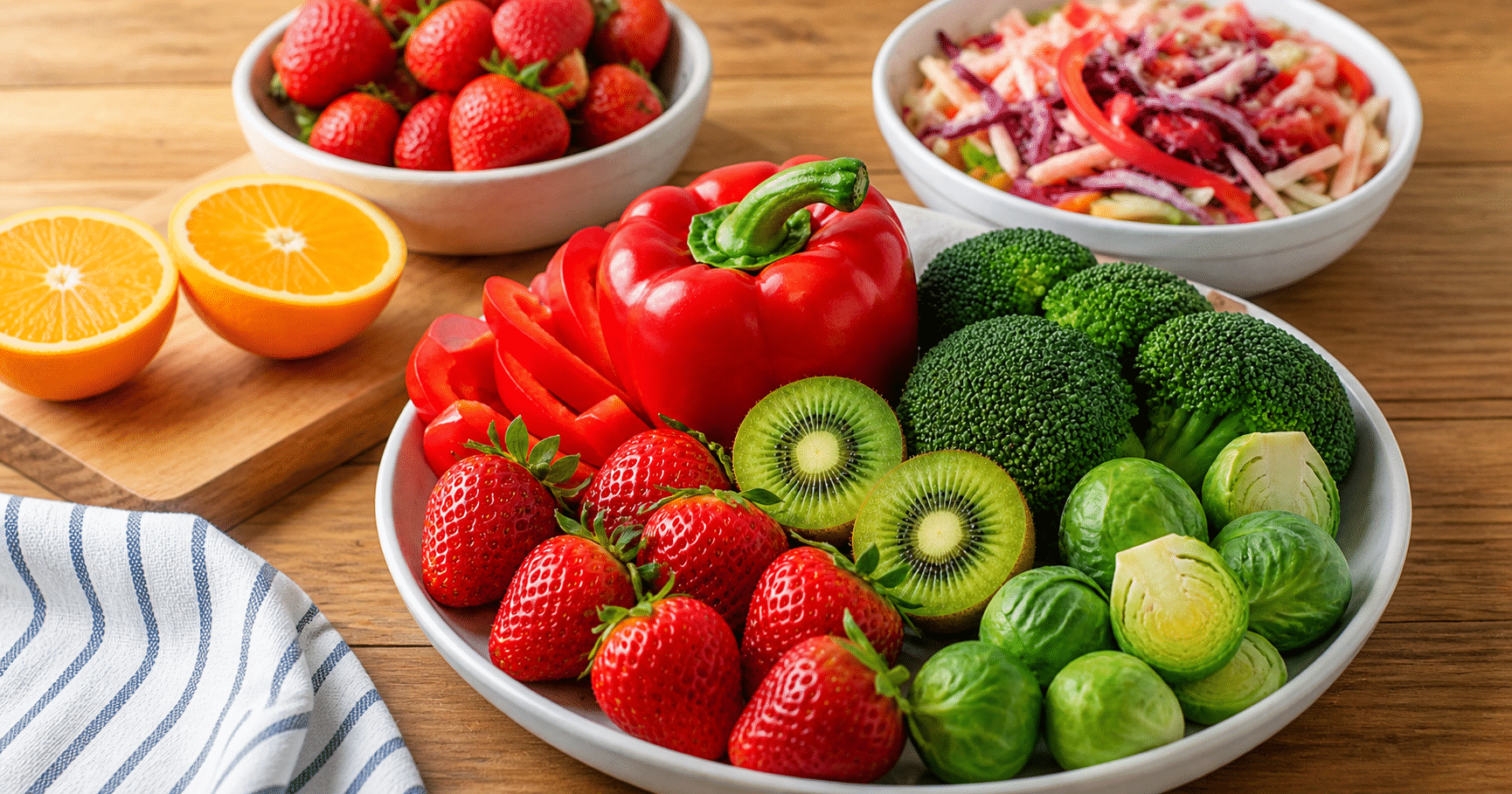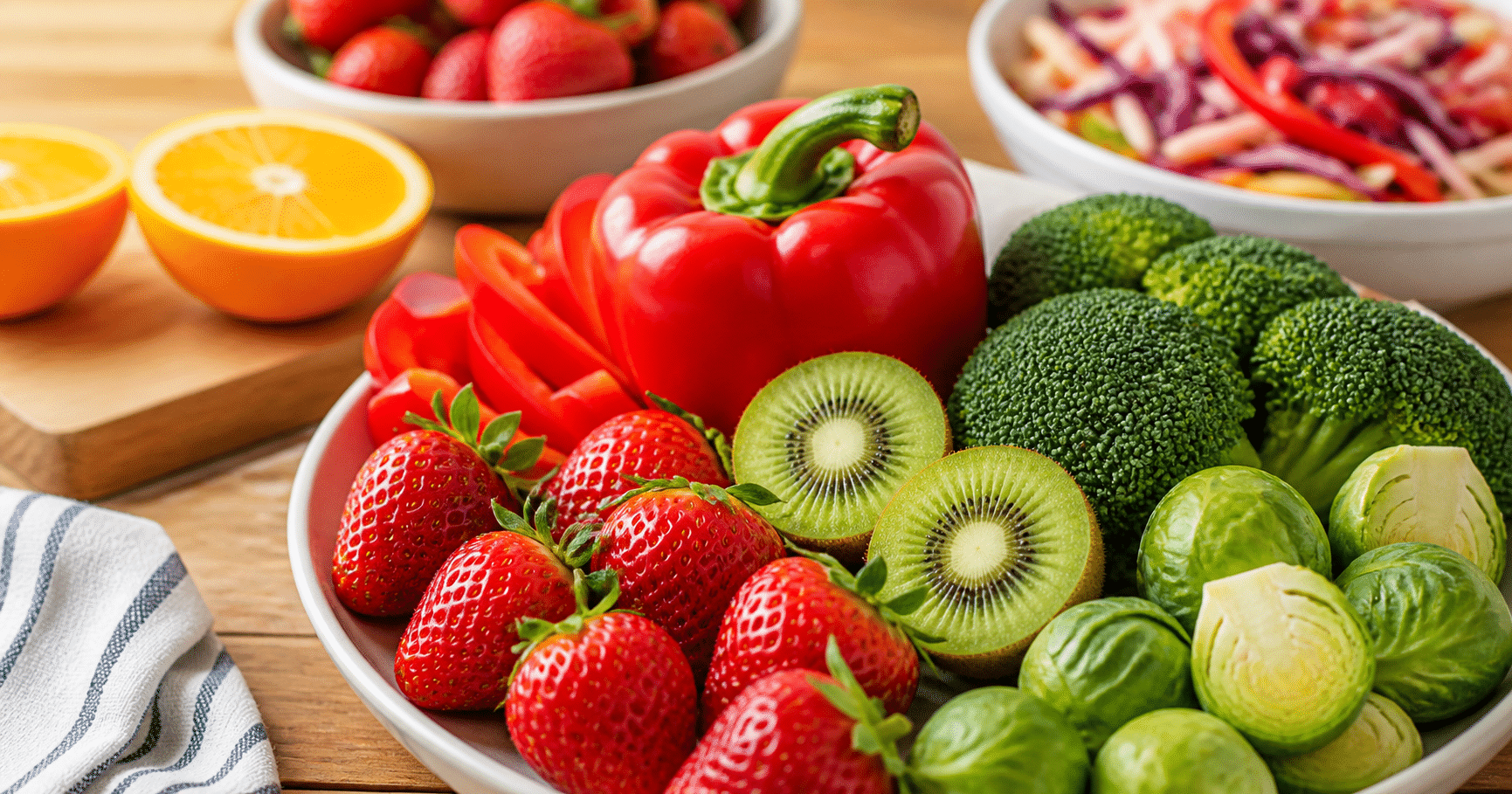
Vitamin C is often associated with oranges, but the produce aisle has plenty of other ways to get it—some with more per serving than a familiar glass of juice. A red bell pepper, a handful of strawberries or a kiwi can all make a meaningful contribution without opening a supplement bottle.
That variety is useful because vitamin C is water-soluble: the body doesn’t store large reserves, so regular food sources matter. Yet a common kitchen mistake can reduce how much remains in a meal: cooking produce for a long time in plenty of water.
For most adults over 50, needs don’t rise simply because of age. The recommended daily amount is 75 milligrams for women and 90 milligrams for men; people who smoke need an additional 35 milligrams a day. Here are practical food choices, ways to preserve more of the nutrient, and a quick recipe that puts several sources on one plate.
Why Vitamin C From Food Is Worth Making Room For
Vitamin C helps the body make collagen, a protein used in skin, blood vessels, cartilage and other tissues. It also supports normal immune function and acts as an antioxidant. These are essential roles, but eating vitamin C-rich foods is not a guarantee against colds or a treatment for illness.
Food has a practical advantage: it can deliver vitamin C alongside fiber, water and other nutrients. Vitamin C also helps the body absorb non-heme iron, the type found in beans, lentils, tofu and many vegetables. Adding bell pepper or citrus to a bean dish, for example, is a simple way to pair the two.
Daily needs can be met through meals rather than a single “superfood.” Amounts below are approximate; variety, growing conditions, storage and serving size can change the numbers.
Five Everyday Foods That Bring Plenty of Vitamin C
1. Red bell pepper: A crisp, concentrated option
About half a cup of chopped raw red bell pepper provides roughly 95 milligrams of vitamin C—around a full day’s recommended amount for many adults. Slice it into salads, serve it with hummus or add it near the end of cooking so it stays crisp.
2. Strawberries: Easy to add at breakfast
A cup of sliced strawberries contains about 85 milligrams. Add them to oatmeal after it has cooked, spoon them over plain yogurt or eat them as a snack. Frozen strawberries can also be useful; check the package for added sugar if that matters to you.
3. Citrus: Convenient, but not the only answer
A medium orange has about 70 milligrams. Grapefruit and other citrus fruits contribute vitamin C too, though amounts vary. Whole fruit provides fiber that juice does not, and it is usually easier to keep portions moderate with fruit than with a large glass of juice.
4. Kiwi: Small fruit, useful contribution
One medium green kiwi provides roughly 60 milligrams. Halve it and scoop it out, or peel and slice it into a fruit bowl. Its tangy flavor also works well alongside sweeter fruit.
5. Broccoli and Brussels sprouts: Good cooked choices
Half a cup of cooked broccoli has roughly 50 milligrams, while half a cup of cooked Brussels sprouts provides about 48 milligrams. Steaming or microwaving with a small amount of water can help limit nutrient loss compared with boiling and draining. Cooking does not remove all the vitamin C, but prolonged heat can reduce it.
A Quick Red Pepper and Strawberry Slaw
This no-cook side dish combines two vitamin C sources with cabbage for crunch. It takes about 15 minutes and makes four servings; the exact nutrient content will vary with the produce and portions.
Ingredients
-
- 1 medium red bell pepper, thinly sliced
-
- 1 cup sliced strawberries
-
- 2 cups thinly sliced green or red cabbage
-
- 2 tablespoons lemon juice
-
- 1 tablespoon olive oil
-
- 1 teaspoon honey, optional
-
- A pinch of salt and black pepper
Step-by-Step Instructions
-
- Whisk the lemon juice, olive oil, honey if using, salt and pepper in a small bowl.
-
- Put the pepper, strawberries and cabbage in a serving bowl.
-
- Pour the dressing over the vegetables and fruit. Toss gently and serve right away, or chill briefly before serving.
Try it alongside beans, grilled fish or chicken, or spoon it into a sandwich. For the freshest texture, keep leftovers covered in the refrigerator and aim to eat them within a day; the fruit and cabbage soften as they sit.
Small Habits That Help Preserve Vitamin C
Vitamin C can decline with extended storage, exposure to air and heat, and cooking water that gets poured away. You don’t need to avoid cooked vegetables; just favor shorter cooking times and methods that use little water. Add produce to a dish near the end when that suits the recipe.
Frozen fruits and vegetables are another practical option. They can be picked and frozen quickly, and they make it easier to keep produce on hand. Choose plain products when possible, and follow package directions rather than assuming every frozen food needs a long cook.
Think in combinations, not single ingredients: add strawberries to breakfast, pepper to lunch and broccoli to dinner. A few ordinary choices across the day can do more than relying on one food to carry the whole job.
Let Produce Do the Everyday Work
Red bell pepper, strawberries, citrus, kiwi, broccoli and Brussels sprouts are all workable sources of vitamin C. Raw or lightly cooked options can make it easy to include them regularly, while meals that pair vitamin C-rich produce with beans or lentils can also support iron absorption.
The simplest plan is a varied one: keep fruit visible, add a vegetable to meals, and cook produce gently when you can. Supplements have a role for some people, but a colorful plate is a practical place to start.